
Jersey City, NJ Personal Injury Lawyers: Why Getting Hurt in a Walking City Is Different
If you've ever tried to cross Newark Avenue at rush hour, or waited for a gap in traffic on Marin Boulevard while a PATH train rumbles overhead, you already understand something that most generic legal websites never mention: Jersey City is not built like the rest of New Jersey. It's dense, it's vertical, and it moves people on foot, by light rail, and by bike almost as much as by car. That's exactly why the personal injury claims that come out of Jersey City look different from the ones filed in suburban Hudson or Bergen County towns, and why finding a personal injury lawyer who actually understands this city matters more than most people realize.
This isn't a generic overview written for every town in New Jersey with the city name swapped in. It's a real look at how accidents happen here, what New Jersey law says about your rights, and what actually goes into calculating injury compensation after a car crash, a fall, or a construction accident in Jersey City.
Jersey City Is Built Differently, and That Changes How People Get Hurt
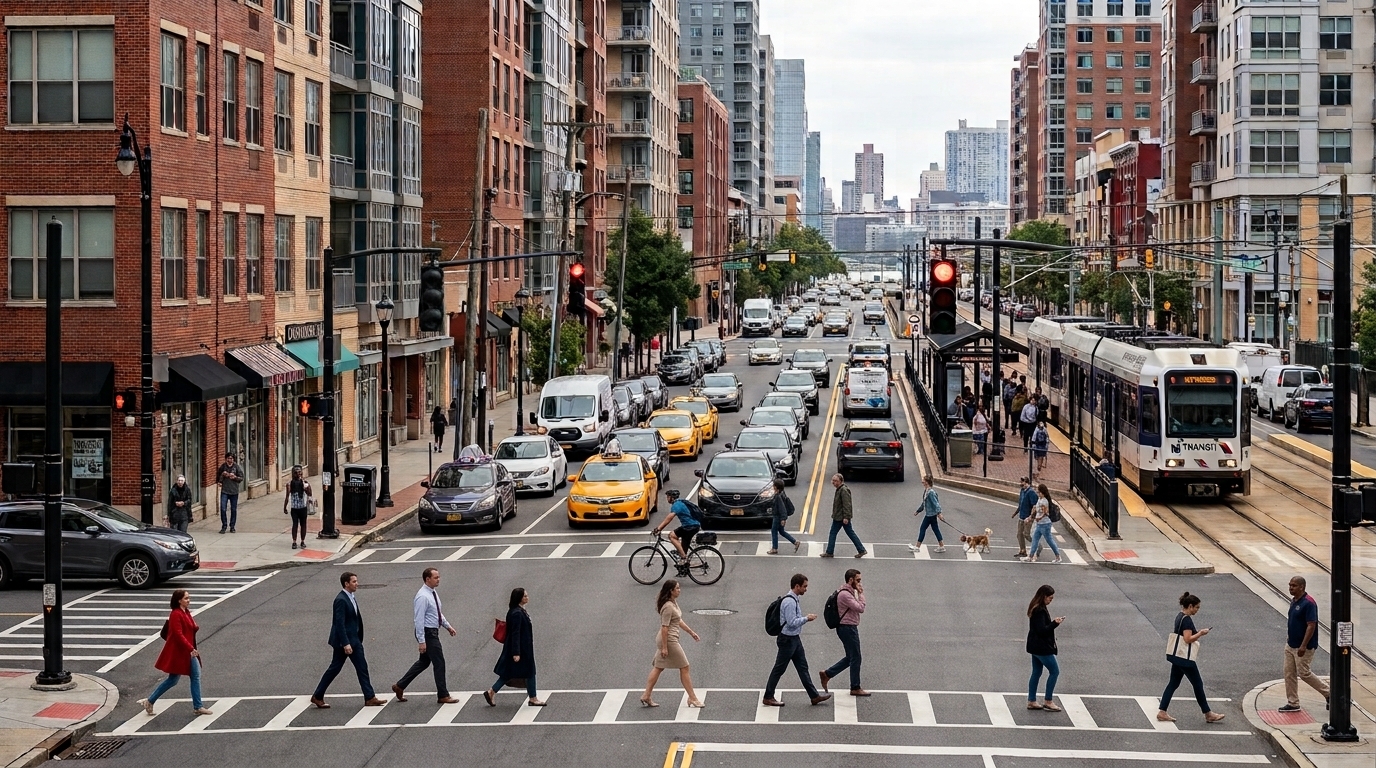
Jersey City has a Walk Score of 87, one of the highest in the state, which means most residents can run their daily errands on foot without ever starting a car. Add a Transit Score of 70, roughly 27 bus routes, four commuter rail lines, and two light rail lines, and you get a city where a huge share of daily trips happen outside a vehicle. In fact, recent city data shows the percentage of Jersey City households without a car has climbed from 38% to 43% in just a few years.
That sounds like a win for walkability, and in many ways it is. But it also means more people are sharing narrow streets with delivery vans, rideshare drivers circling for pickups, and commuters trying to beat the light at intersections near Journal Square, McGinley Square, Grove Street, and The Heights, some of the most pedestrian-heavy neighborhoods in New Jersey. Add the daily bottleneck of traffic feeding into the Holland Tunnel and the New Jersey Turnpike extension, and you have a city where congestion and foot traffic collide constantly, sometimes literally.
The city's own Vision Zero program has made real progress. Jersey City averaged 3.67 traffic deaths a year in the years before Vision Zero launched in 2019, and that number has fallen to roughly 2 a year since 2022. Still, 2024 alone saw 9 traffic-related deaths on city streets, and an independent review found that more than half of the 77 action items in the city's own safety plan remain incomplete or haven't started. Progress is real, but so is the risk, and it hasn't gone away.
The Four Ways People Actually Get Hurt Here
Most law firm websites list “car accidents, slip and falls, and wrongful death” and move on. In a city like this, it's worth being specific about what actually causes injury claims.
Pedestrian Accidents
New Jersey law gives pedestrians the right of way in marked and unmarked crosswalks under N.J.S.A. 39:4-36, but a law on paper doesn't stop a driver from rolling through a turn while looking at a phone or trying to beat a light at a busy corner. Jersey City's density means pedestrian crashes aren't rare edge cases here the way they are in car-dependent towns. If you were hit while crossing legally, the driver's failure to yield is often the core of the claim, but insurance adjusters will still try to shift blame onto the person on foot. That's where an experienced personal injury attorney earns their fee.
Car & Rideshare Accidents
Between Newport, Exchange Place, and the daily crush of commuters funneling toward the Holland Tunnel, Jersey City traffic is some of the most congested in the state. Add a constant stream of Uber and Lyft vehicles circling for fares near the PATH stations, and you get a mix of stop-and-go collisions, rear-end crashes, and turning accidents. Rideshare crashes come with their own wrinkle: figuring out whether the driver's personal auto policy or the rideshare company's commercial coverage applies depends on whether the app was on, whether a ride was accepted, and whether a passenger was in the car at the time.
Slip & Fall and Premises Liability
Sidewalks in front of commercial buildings, icy stairwells at apartment complexes, wet floors in retail spaces along Newark Avenue's pedestrian plaza. New Jersey draws a real legal distinction between commercial property owners, who generally must keep abutting sidewalks reasonably safe, and residential homeowners, who face a narrower duty. Knowing which category a property falls into often decides whether a claim is even viable before it gets to the question of injury compensation.
Construction & Workplace Injuries
Jersey City is in the middle of one of the biggest development booms in the state, with high rises going up around Journal Square and the waterfront seemingly every year. More cranes and scaffolding means more injury risk, not just for construction workers but for pedestrians walking past active sites. Workers hurt on the job usually go through workers' compensation first, but when a subcontractor, equipment manufacturer, or property owner other than the direct employer is at fault, a separate personal injury claim can often be filed alongside it.
What New Jersey Law Actually Says About Your Claim

A few rules shape almost every injury case filed in Jersey City and the rest of New Jersey, and they're worth understanding before you ever pick up the phone.
You generally have two years from the date of an accident to file a personal injury lawsuit under N.J.S.A. 2A:14-2. That sounds like plenty of time, but evidence disappears fast. Security camera footage gets overwritten in days or weeks. Witnesses move. Waiting even a few months can quietly weaken a claim that would have been strong on day one.
New Jersey also follows a modified comparative negligence rule under N.J.S.A. 2A:15-5.1. If you're found partly at fault for your own accident, your compensation gets reduced by your percentage of fault, but only if you're less than 51% responsible. Cross that line and you recover nothing. This is exactly why insurance companies push so hard to pin even a small percentage of blame on the injured person, especially in pedestrian and rideshare cases where fault can get murky fast.
And because New Jersey runs on a no-fault auto insurance system, your own PIP coverage typically pays your initial medical bills regardless of who caused the crash, but suing the at-fault driver for pain and suffering usually requires meeting a specific injury threshold. It's a detail that trips up a lot of people who assume no-fault means no lawsuit is possible. That's not how it works.
How Injury Compensation Actually Gets Calculated
People searching for a personal injury lawyer often want a number before they want an explanation, and that's fair. But real injury compensation in Jersey City cases usually comes down to a handful of factors, not a formula pulled from a settlement calculator online.
Medical bills, both what's already been paid and what future treatment will likely cost, form the foundation. Lost wages come next, including time missed from work and, in more serious cases, a reduced ability to earn going forward. Then there's pain and suffering, which covers the physical and emotional toll of the injury itself, harder to quantify but very real, and often the largest disputed piece of a claim. Property damage, out-of-pocket costs for things like transportation to medical appointments, and in the most serious cases, permanent impairment or disfigurement can all factor in too.
Two people with similar injuries can end up with very different outcomes depending on how quickly they got medical care, how well their treatment was documented, and whether their attorney pushed back on a lowball early offer instead of accepting it.
What to Do in the First 48 Hours
Get medical attention immediately, even if the injury seems minor at first. Adrenaline masks pain, and a gap between the accident and your first medical visit is exactly what insurance adjusters look for to argue the injury wasn't serious or wasn't related to the accident at all.
Report the incident, whether that means calling Jersey City police for a crash, notifying a property manager after a fall, or reporting a workplace injury to a supervisor. Get a copy of that report if you can.
Photograph everything: the scene, the hazard, your visible injuries, the weather, the road markings, the broken step. Phones make this easy, and this kind of evidence is the first thing that disappears.
Be careful what you say to insurance adjusters, especially the other party's insurer. A casual “I'm fine” on a recorded call can end up used against you weeks later when your injury turns out to be more serious than it felt in the moment.
Why Local Counsel Actually Matters
A personal injury law firm that handles cases across the entire state isn't automatically the wrong choice, but there's a real difference between hiring any injury lawyer and hiring a Jersey City injury lawyer who has actually stood on these corners. Real value comes from working with attorneys who know Hudson County Superior Court, who understand how Jersey City's specific traffic patterns and construction zones factor into liability, and who have dealt with the same insurance adjusters and claims patterns that come out of this particular city again and again. That familiarity shows up in how a case gets built from day one, not just how it gets argued at the end.
Talk to a Jersey City Personal Injury Lawyer Who Knows This City

Every one of the situations above, a pedestrian hit near a crosswalk, a rideshare crash on a congested downtown street, a fall on an icy sidewalk, an injury near a construction site, plays out differently depending on the details, and the details are exactly where cases get won or lost. At Scura, Wigfield, Heyer, Cammarota & Gonzalez, LLP, we've built our practice around understanding those details, not just for Jersey City in general terms, but for the specific streets, buildings, and patterns that make this city what it is.
Our firm has offices in Hudson County and has tried many cases in the Hudson County Courthouse, located in Jersey City. Two of our firm partners are from Hudson County.
If you or someone you love has been hurt in Jersey City, don't wait to find out where you stand. Reach out to our team for a free consultation. There's no cost to talk, no obligation, and no fee unless we win your case.
Frequently Asked Questions
- How long do I have to file a personal injury claim in New Jersey?
- In most cases, two years from the date of the accident under N.J.S.A. 2A:14-2, though exceptions exist for claims involving government entities, minors, and certain other circumstances.
- What if I was partly responsible for the accident?
- You can still recover compensation as long as you're found less than 51% at fault, though your award gets reduced by your share of the blame under New Jersey's comparative negligence law.
- The insurance company already offered me a settlement. Do I still need a lawyer?
- Early offers are almost always lower than what a claim is actually worth, especially before the full extent of an injury is known. An experienced injury attorney can evaluate whether an offer reflects the real value of your claim before you sign anything that closes it out for good.
- What does hiring a personal injury attorney cost upfront?
- Most personal injury lawyers, including our firm, work on contingency, meaning there's no fee unless we recover compensation for you.