
With increasing pressure from economic changes in the US, you may find yourself squeezed between lower wages and mounting debt. In certain cases, you may need a fresh start to escape the situation so you can rebuild your life. Bankruptcy sometimes carries social stigma, but it can be a valid legal process for reviving your ability to meet your financial obligations.
The Clifton bankruptcy lawyers at Scura, Wigfield, Heyer, Stevens & Cammarota, LLP have the knowledge and experience to help you understand your options and take the right path for your needs. We can assist you with filing for Chapter 7 or Chapter 13 for personal debts, as well as Chapter 11 for your business bankruptcy. We treat you with respect and dignity, starting with your first consultation when you contact us today.
Our Bankruptcy Attorneys Offer Over Five Decades of Experience
At Scura, Wigfield, Heyer, Stevens & Cammarota, LLP, we opened our doors in 1972 to assist residents in Clifton, NJ, and across the state with understanding the complexities of the bankruptcy process. We know you may feel overwhelmed by the thought of filing bankruptcy, but we pride ourselves on being a calming guide through an otherwise difficult time.
Every professional at our Clifton bankruptcy law firm has deep experience with the federal Bankruptcy Code and how to guide you through the bankruptcy process in New Jersey. We collaborate with experts in other fields to fully support your journey from uncertainty to a brighter future. Your bankruptcy lawyer will help you see issues clearly and build a roadmap to help you move beyond worry, debt, and fear.
Once you meet with a Clifton bankruptcy attorney at our firm, we believe you will agree with what our clients say about us. We help you collect the necessary documents to prepare your case, then manage the rest on your behalf to reduce your stress. Our core beliefs are to interpret bankruptcy law to your advantage whenever necessary and to treat you with compassion and dignity.
What You Need to Know About Filing Bankruptcy

We are often taught that we should work hard, pay our debts, and that success will naturally follow. Yet this is often much more difficult to achieve than it seems when the job market fluctuates regularly, and you face personal hardships. When you find you can no longer pay your debt, you can turn to bankruptcy to reorganize and renew your financial landscape.
Bankruptcy can be stressful and complicated, but a skilled bankruptcy attorney can minimize the downsides while keeping you focused on the light at the end of the tunnel. You use the process to protect your critical assets, such as your home and vehicle, while you discharge or negotiate your debt with creditors. When your bankruptcy is finalized, you can rebuild your credit score and return to pursuing your dreams.
The nuances and potential pitfalls in the process demand experienced guidance from a bankruptcy law firm that concentrates on this field. We offer more than legal representation against aggressive creditors. We help you safeguard your business, your family’s security, and your sense of pride in successfully overcoming a major obstacle in life.
Types of Bankruptcy Used in New Jersey
Besides Chapters 7 and 13, there are additional types of bankruptcy cases, including the following:
- Chapter 9 - Used when a government municipality requires bankruptcy
- Chapter 11 - Used by corporations and partnerships, such as LLPs, S-Corps, and C-Corps
- Chapter 12 - Applies to family farms and fishing operations
- Chapter 15 - Governs bankruptcies involving international assets
If you believe you are eligible for a business bankruptcy in New Jersey, our attorneys can discuss your concerns and help you determine if Chapter 11 is right for you. It’s also possible to file a Chapter 7 case for certain kinds of businesses or a Chapter 13 case if you are self-employed and own your own company. These paths are typically less difficult and costly, but your specific citation may demand a Chapter 11 bankruptcy instead.
What Happens if I Have Business Debts During a Chapter 7 Bankruptcy?
Similar to co-signed debts, if you have business debts during a Chapter 7 case in addition to your personal debts, someone has to pay. If you take out Small Business Administration (SBA) loans to support your business, you generally have to sign a personal guarantee. Doing so means the loan gets repaid from your personal funds if the company does not have enough revenue to honor the loan.
If you created your company as a Limited Liability Corporation (LLC), this can shield you from financial responsibility in most cases, but you have to be very careful about using your business to cover personal costs. If a creditor can show that you mixed company and personal expenses and purchases without keeping a clear distinction between the two, they may successfully hold you liable for business debts, preventing a discharge.
The Basic Process of Filing Bankruptcy in Clifton, NJ
You begin by meeting with an attorney at your choice of Clifton bankruptcy law firms to discuss your concerns and prospects. Your lawyer can provide a checklist so you can inventory what you own, how much you owe, and the names of your creditors. This allows them to advise the most appropriate option and explain what happens next.
Your lawyer will then prepare and file a petition to the District of New Jersey Bankruptcy Court detailing your income, assets, debts, and monthly expenses. When the court accepts your filing, it issues an automatic stay that stops all collection efforts from your creditors. That means no more harassing phone calls, lawsuits, or wage garnishments.
The court assigns a bankruptcy trustee, and your Clifton bankruptcy attorneys will represent your interests with that individual. Together, they create an action plan for liquidating assets or reorganizing debt obligations according to the rules of your selected bankruptcy option. You do not have to lose everything in bankruptcy, and can retain essential assets.
Exempted Assets During Bankruptcy
Bankruptcy proceedings generally follow federal rules, which allow you to exempt some kinds of assets. These include furniture, clothing, home equity, and retirement funds. However, the specific amounts of these exemptions are set by state law. Most of the time our firm uses the Federal Exemptions for our clients and those amounts under 11 U.S.C. Section 522, which are adjusted every three years, are currently as of February 2026 as follows:
- Personal Property: $800 per item, with a total cap of $16,050 for household goods, clothes, animals, books, etc.
- Homestead: $30,550 in real property or a burial plot.
- Motor Vehicle: $5,000 in one vehicle.
- Jewelry: $2,050 in jewelry.
- Wildcard Exemption: $1,600 plus up to $15,150 of any unused portion of the homestead exemption.
- Tools of the Trade: $3,075 for tools, books, or implements.
- Life Insurance: $15,150 in value for any unmatured life insurance contract.
- Retirement Funds: Tax-exempt retirement accounts (like 401ks, IRAs) are generally protected, with a maximum aggregate value of $1,711,975.
- Injury Compensation: Up to $27,550 for personal bodily injury (excluding pain and suffering).
- Spousal support payments
- Child support payments
- Burial plots
- Retirement funds up to $1,095,000
- Most insurance policy payouts
- Unemployment benefits
- Workers’ compensation payments
Note that these amounts are doubled for married couples. Depending on the details of your case, the court generally allows you to keep a vehicle and any electronic devices necessary for your work. This could include your cell phone and computer, but you may need to sell other items to pay your debts. Your bankruptcy attorneys can advise you on making the right selections to help you honor your payment plan’s requirements.
Types of Bankruptcy We Handle in New Jersey

The bankruptcy process is a formalized legal procedure, governed by federal law in courts across the country. In Clifton, we present cases in the bankruptcy court for the District of New Jersey, primarily serving clients for Chapter 7, Chapter 11, and Chapter 13 filings.
In a Chapter 7 case, you will liquidate your assets to pay creditors within a short period, usually 3 to 6 months. Those who need to file Chapter 13 often have higher debt amounts and will reorganize their debt for payment over a longer timeframe.
For businesses that need to file, Chapter 11 mandates reorganization so the company can emerge more streamlined and with manageable obligations. In all instances, our Clifton bankruptcy attorneys work to retain vital assets so you can focus on your daily activities.
Bankruptcy Statistics for New Jersey
According to the United States Bankruptcy Courts: Overview and Analysis of Bankruptcy Filings, the District of New Jersey Bankruptcy Court ranked third in the nation in a recent 12-month period for the number of cases filed. During that time, the court processed 1,365 business cases. The District of New Jersey reported 761 total cases during 2025, with 550 Chapter 7 petitions, 19 for Chapter 11 cases, and 192 Chapter 13 filings.
Understanding Chapter 7 Bankruptcy in Passaic County
To file for a Chapter 7 bankruptcy case in Passaic County, you should have few assets and dischargeable debts. One of the first steps when you speak with a Clifton bankruptcy lawyer is to review the means test used by the bankruptcy court. To qualify for Chapter 7, your household income must be below the median income for similar-sized families in the same region.
Your bankruptcy trustee inventories what you own and what you owe, and verifies that your income after paying your living expenses is insufficient for paying debts. They sell all nonexempt assets to pay creditors and can discharge some debts, such as credit cards, if there isn’t enough to pay all liabilities. In New Jersey, how long a bankruptcy case takes varies, but most finalize in 3-4 months.
How Chapter 13 Bankruptcy Works in New Jersey
If the means test finds that you exceed the median income level for New Jersey, you will have to file for Chapter 13 bankruptcy. The process is similar to Chapter 7, in that you work with a bankruptcy trustee, but you have a better chance of keeping most of your assets. Instead, you and your bankruptcy lawyer negotiate payment plans with your creditors and make payments to the trustee.
The trustee distributes payments to the creditors over either 3 or 5 years, depending on the plan you negotiated. While you may find yourself selling some assets to make your payments, you are in control of that process instead of a trustee. Part of your plan may include pushing creditors to reduce your interest rates to help you pay off debt faster, so you clear debt and the creditor gets payment rather than potentially nothing.
Differences Between Chapter 7 and Chapter 13
- Chapter 7 bankruptcies average 3-4 months to complete, but Chapter 13 cases last either 3 or 5 years.
- Chapter 7 bankruptcy stays on your credit history for 10 years, and Chapter 13 for 7 years.
- Chapter 7 is the faster way to eliminate as much debt as possible, while Chapter 13 provides a longer payment period and better asset protection.
- In Chapter 7, mortgage and lien holders can potentially repossess your property to satisfy the debt. In Chapter 13, they cannot do so as long as you make payments during the established plan period.
- In Chapter 7, your non-dischargeable debts survive when your case ends, although you can try to negotiate a lower settlement. For Chapter 13, you pay alimony, child support, criminal fines, and tax debts as part of your payment plan.
You may realize that you have other options when you speak with our bankruptcy lawyers. You and your attorney could negotiate a lower settlement for credit card or medical debt directly with the creditor. Our team can also advise you if you find yourself accused of bankruptcy fraud, which can bring significant financial and criminal penalties. No matter what happens in your case, our attorneys will be at your side, giving you our best advice for your circumstances.
Meet With Our Clifton Bankruptcy Lawyers
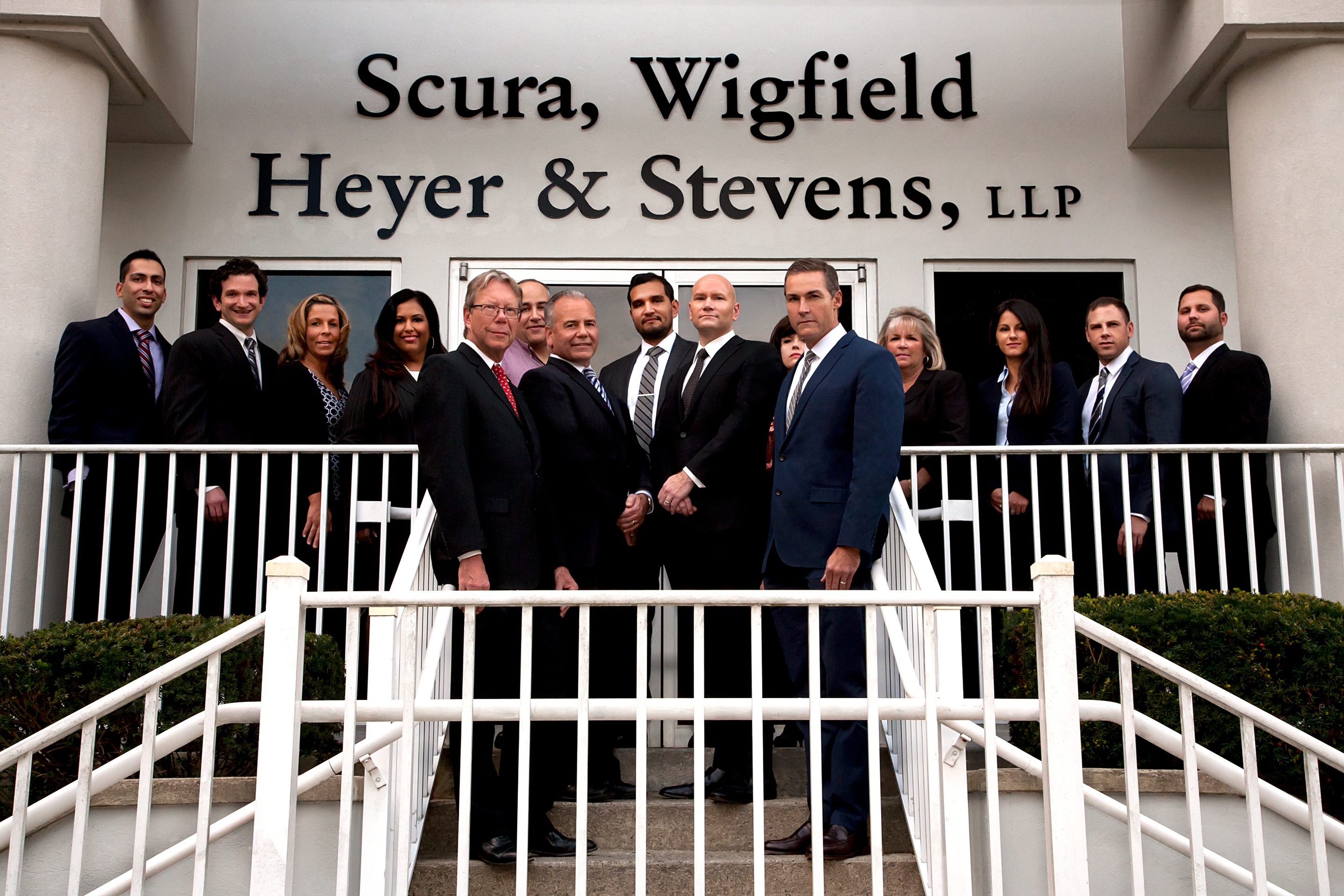
As one of New Jersey’s top bankruptcy law firms, Scura, Wigfield, Heyer, Stevens & Cammarota, LLP strives to move you through the process as quickly and as stress-free as possible. We can help you at any stage of the bankruptcy process, whether you have already filed or want to know more about whether you are a candidate.
To learn more about whether you are ready for bankruptcy, contact us to arrange a consultation. Our Clifton bankruptcy attorneys are waiting to help you start the journey to a financially secure future.