
Motorcycle crashes are among the most catastrophic motor vehicle accidents on New Jersey roads. While motorcycles offer a sense of freedom and adrenaline that other vehicles cannot match, that freedom comes with significantly increased risk. At our firm, we have seen firsthand the devastating toll that motorcycle crashes can take on our clients. I have had multiple clients that have been killed or suffered debilitating injuries. Along with the injuries comes the long-term emotional and financial destruction that follows a split-second collision.
New Jersey motorcyclists face unique legal and safety challenges that car and truck drivers do not. From the statutory absence of Personal Injury Protection (PIP) benefits to the psychological reality that many motorists fail to notice motorcycles at all, these riders must navigate a far more dangerous road. In NJ, you are dealing with the most densely populated State in the country which leads to crowded roads and the failure of car drivers to drive with safe consideration for motorcycles.
In this guide, we will explore the key legal, medical, and practical considerations that make motorcycle accidents distinct from other types of motor vehicle collisions in the Garden State.
The Harsh Reality: No PIP Coverage for Motorcyclists
One of the most significant and often overlooked legal aspects of motorcycle accidents in New Jersey is the absence of Personal Injury Protection (PIP) coverage for injured motorcyclists.
Under New Jersey’s "no-fault" insurance system, drivers of standard motor vehicles are entitled to PIP benefits. These benefits provide immediate medical coverage regardless of who caused the crash, covering hospital bills, doctors’ fees, diagnostic testing, and sometimes lost wages. However, motorcycle operators and their passengers are explicitly excluded from these protections under N.J.S.A. 39:6A-2.

What Does This Mean in Practice?
If you are riding a motorcycle and are hit by a car, your own auto insurance policy will not pay for your medical expenses. This is so even if the crash was entirely the other driver's fault. Thus, a "coverage gap" is created that catches many riders off guard. Unless you have excellent private health, insurance or have specifically purchased optional Medical Payment (MedPay) coverage for your bike, you may be left facing hundreds of thousands of dollars in medical debt before your case even reaches a courtroom.
Because of this statutory exclusion, it is imperative that riders consult with a motorcycle accident injury attorney immediately. We try to help bridge the gap between immediate medical needs and long-term litigation.
Disproportionate Injuries: The Physics of Vulnerability
When a car is hit, the steel frame, airbags, and crumple zones work to absorb much of the impact. Motorcycles, by design, offer no such protection. The rider’s body is the crumple zone. Even a low-speed crash can eject a rider, throw them into oncoming traffic, or crush limbs under a larger vehicle.
According to the National Highway Traffic Safety Administration (NHTSA), motorcyclists are roughly 28 times more likely to die in a crash than occupants of passenger cars.
Common Catastrophic Injuries in NJ
- Traumatic Brain Injuries (TBI): New Jersey has a mandatory helmet law, but even the best helmets cannot prevent the brain from striking the inside of the skull during a high-velocity impact. TBIs often lead to permanent cognitive impairment, personality changes, and memory loss.
- Spinal Cord Injuries and Paralysis: Impact with the pavement or another vehicle often results in fractured vertebrae or severed nerves, leading to paraplegia or quadriplegia.
- Severe Road Rash: This is more than a "scrape." Road rash in motorcycle crashes often involves the stripping away of multiple layers of skin, muscle, and even bone. These injuries frequently require skin grafts and lead to permanent scarring and high risks of infection.
- Degloving and Crushed Limbs: In side-impact collisions, the rider’s leg is often pinned between the bike and the car. This can lead to "degloving" injuries where the skin is ripped from the underlying tissue. This can lead to the need for traumatic amputation.
These injuries require more than just a trip to the ER. They often involve months of hospitalization, multiple surgeries, and lifelong physical rehabilitation. Calculating the full value of these damages is the most critical part of a legal claim.
"Inattentional Blindness": Why Car Drivers "Don't See" Motorcycles
One of the most common statements we hear from drivers who hit motorcyclists is: “I didn’t see them.”
This isn't always a lie; it’s a psychological phenomenon known as Inattentional Blindness. Most drivers are conditioned to look for other cars and trucks. Their brains often "filter out" smaller objects like motorcycles. This unconscious bias has deadly real-world consequences.
Common "Invisible Rider" Scenarios:
- The Left-Turn Collision: A driver at an intersection turns left directly into the path of an oncoming motorcycle because they failed to perceive the bike's speed or presence.
- The Lane-Change Accident: A driver checks their side-view mirror, sees a gap large enough for a car, and merges—sideswiping a motorcyclist who was already occupying that space.
- The "Dooring" Incident: In urban NJ areas like Jersey City or Newark, parked drivers often open their car doors into traffic without checking for two-wheeled vehicles. We have a case right now where the driver opened a door on a busy street in Hudson County catching our client.
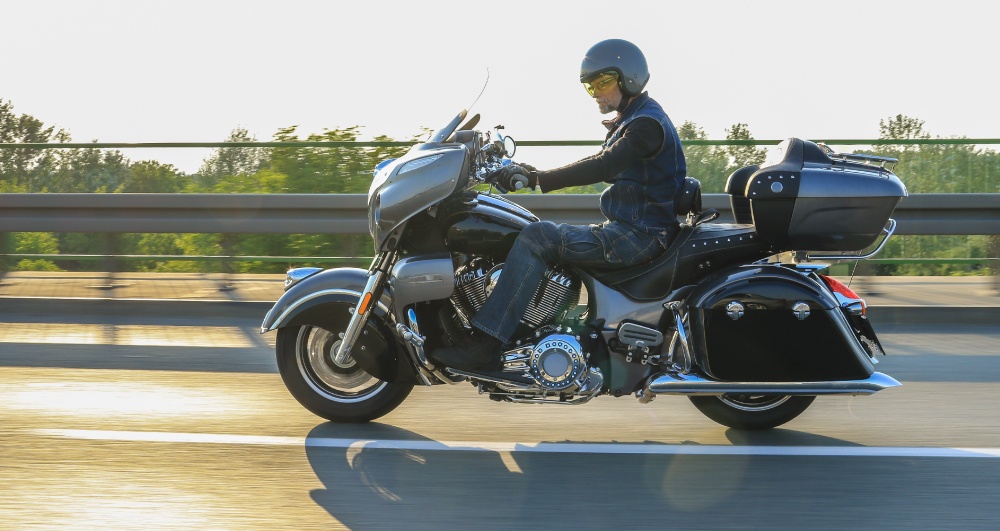
To stay safe, New Jersey riders must drive with a level of "hyper-vigilance" that exceeds what is required of any other driver. However, when a driver’s failure to notice a bike leads to a crash, that driver is still legally negligent.
The "Biker Bias" in Litigation
When a motorcycle crash occurs, a subtle (and sometimes overt) bias against the rider often creeps into the legal process. This bias can originate from:
- Police Officers: Who may assume the rider was speeding based purely on the type of bike.
- Insurance Adjusters: Who label riders as "risk-takers" to lower settlement offers.
- Jurors: Who may harbor stereotypes of motorcyclists as reckless or "thrill-seekers."
This bias can unfairly influence a claim, especially when the facts of the crash are ambiguous. An experienced New Jersey motorcycle lawyer knows how to counter this by using accident reconstruction experts, helmet cam footage, and witness testimony to prove the rider was a responsible, law-abiding citizen.
Navigating NJ’s Modified Comparative Negligence Rule
New Jersey follows a Modified Comparative Negligence rule (N.J.S.A. 2A:15-5.1). This law is the "tipping point" for many motorcycle cases.
Under this rule, an injured person can still recover damages even if they were partially at fault for the accident only if their fault is 50% or less. If you are found to be 51% or more responsible, you recover nothing.
Why This is Dangerous for Riders:
Because of the "Biker Bias" mentioned above, insurance companies will work tirelessly to push the rider’s fault percentage from 20% or 30% up to 51%. They may argue that because the rider was weaving (lane splitting) or "speeding" (even if they weren't), they are the primary cause of the crash.
Defending against these claims requires meticulous investigation. We look for:
- Traffic camera or dashcam footage.
- The motorcycle’s electronic data module (if equipped).
- Expert analysis of skid marks and debris fields to determine actual speed and positioning.
The Critical Importance of UIM Coverage
In New Jersey, many motorcycle accidents are caused by drivers who carry only the state-minimum insurance coverage ($25,000 for bodily injury). Given the severity of motorcycle injuries, $25,000 won't even cover the first hour of a trauma center visit.
This is why we urge all New Jersey riders to carry as much Underinsured Motorist (UIM) Coverage as they can afford.
If you are hit by a driver with low insurance, your UIM coverage acts as a second "bucket" of money. Once the at-fault driver's insurance is exhausted, your own UIM policy kicks in to cover the remainder of your medical bills and pain and suffering. Without UIM, you may win a million-dollar case against a driver who has no assets and only a $25,000 policy, leaving you with no way to collect the money you need.

Recoverable Damages in a Motorcycle Claim
Because PIP is unavailable, motorcycle crash victims are often allowed to pursue a broader range of damages from the very beginning of their claim. These include:
- Past and Future Medical Expenses: Since you don't have PIP to pay the bills as you go, your final settlement must cover every dollar spent on your recovery.
- Lost Wages and Diminished Earning Capacity: If your injuries prevent you from returning to your previous career (common in TBIs or spinal injuries), you are entitled to the lifetime value of those lost earnings.
- Pain and Suffering: This is a non-economic damage that compensates you for the physical pain and the loss of the quality of life you enjoyed before the crash.
- Loss of Consortium: Compensation for the impact the injury has on your relationship with your spouse.
What to Do After a Motorcycle Accident in NJ
If you are involved in a crash, your actions in the first 60 minutes can determine the outcome of your legal case:
- Call 911 and Demand an Ambulance: Do not "walk it off." Adrenaline can mask internal bleeding and spinal fractures.
- Stay with the Bike: Unless you are in immediate danger of being hit again, stay where you are until help arrives. Moving too much can worsen spinal injuries.
- Identify Witnesses: If bystanders stop, ask for their phone numbers. They may be the only ones who can testify that you were not speeding.
- Take Photos of Gear: Your scuffed helmet and torn jacket are evidence of the force of the impact. Do not throw them away.
- Do Not Speak to the Other Driver's Insurance: They will call you within 24 hours. They are looking for a statement they can use to assign you 51% fault. Simply tell them your lawyer will be in touch.
Our Firm’s Scientific Analysis of Cases and Strategy
Our firm is proud to work with two retired judges who bring decades of trial and judicial experience to our case strategy. We involve them in analyzing many of our cases. Our two Judges are:
- Judge Randall Chiocca, former Presiding Chancery Judge of Passaic County
- Judge Thomas Brogan, former Presiding Civil Judge of Passaic County
Judge Chiocca and Judge Brogan meet with our litigation team to review case facts, evaluate liability and damages, and help anticipate how different arguments will play with a sitting judge or jury. The Judges advise on evidence issues and likely rulings. Most important, they mentor our young attorneys. This invaluable feedback shapes our litigation approach and improves outcomes.
In-House Mock Jury Focus Groups
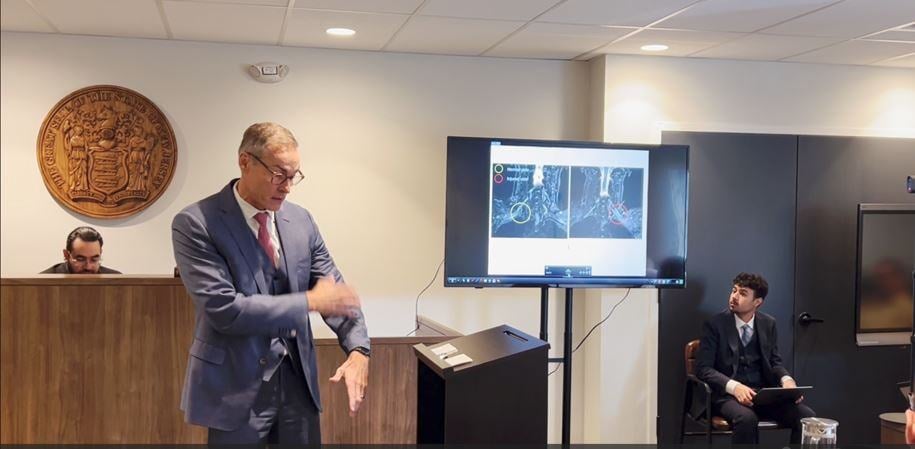
Our office has a mock courtroom where we regularly conduct focus groups and with mock jurors, we pay to evaluate cases. This allows us to:
- Gauge how people in the community respond to the facts and issues
- Identify weaknesses in our presentation
- Refine our arguments in line with their evaluation
- Understand juror in motorcycle cases
Final Thoughts: Why Expert Legal Counsel is Non-Negotiable
Motorcycle crashes are not "regular car accidents on two wheels." They are legally, medically, and emotionally complex puzzles. Between the PIP exclusion, the risk of 51% comparative negligence, and the severity of the injuries, there is no room for error.
At our firm, we understand the unique challenges riders face because we've been in the trenches with them for decades. We know how to push back against insurance bias and how to maximize every possible source of recovery—from UIM policies to third-party liability claims.
If you or a loved one has been injured on New Jersey roads, do not navigate this alone. Contact our office today for a free, no-obligation consultation to discuss your rights and your path to recovery.
Call one of our NJ lawyers today to schedule a free consultation with a knowledgeable motorcycle accident attorney.

Frequently Asked Questions About New Jersey Motorcycle Accidents
Who pays for medical bills after a motorcycle accident in New Jersey?
Because motorcyclists are excluded from Personal Injury Protection (PIP) benefits under N.J.S.A. 39:6A-2, your own auto insurance will not pay your medical bills. You must typically rely on your private health insurance, optional "MedPay" coverage on your motorcycle policy, or seek reimbursement through a personal injury lawsuit against the at-fault driver.
Does the "Limitation on Lawsuit" (Verbal Threshold) apply to motorcycles in NJ?
Generally, no. One of the few legal advantages for NJ riders is that they are often not subject to the "verbal threshold" or "limitation on lawsuit" option found in standard auto policies. This means an injured rider can often sue for pain and suffering even if their injury is not considered "permanent" under the strict definitions used for car drivers.
Can I still recover damages if I was partially at fault for my crash?
Yes. New Jersey follows the Modified Comparative Negligence rule. As long as you are determined to be 50% or less at fault for the accident, you can still recover damages. However, your total compensation will be reduced by your percentage of fault. If you are found 51% or more at fault, you are barred from recovery.
What happens if the driver who hit me doesn't have enough insurance?
If the at-fault driver has state-minimum coverage that doesn't cover your medical needs, you can file a claim under your own Underinsured Motorist (UIM) coverage. This is why we recommend riders carry the highest UIM limits possible, as motorcycle injuries almost always exceed the $25,000 minimum policy limits.
Why do car drivers often say they "didn't see" the motorcycle?
This is a documented phenomenon called Inattentional Blindness. The human brain is often conditioned to look for the large shapes of cars and trucks, effectively "filtering out" smaller silhouettes like motorcycles. Even if a driver is looking in your direction, they may not consciously perceive your presence until it is too late.
How long do I have to file a motorcycle accident claim in New Jersey?
In New Jersey, the Statute of Limitations for personal injury claims is generally two years from the date of the accident. If you fail to file a lawsuit within this window, you lose your right to seek compensation. However, because evidence like skid marks and witness memory fades quickly, it is best to consult an attorney immediately.


