
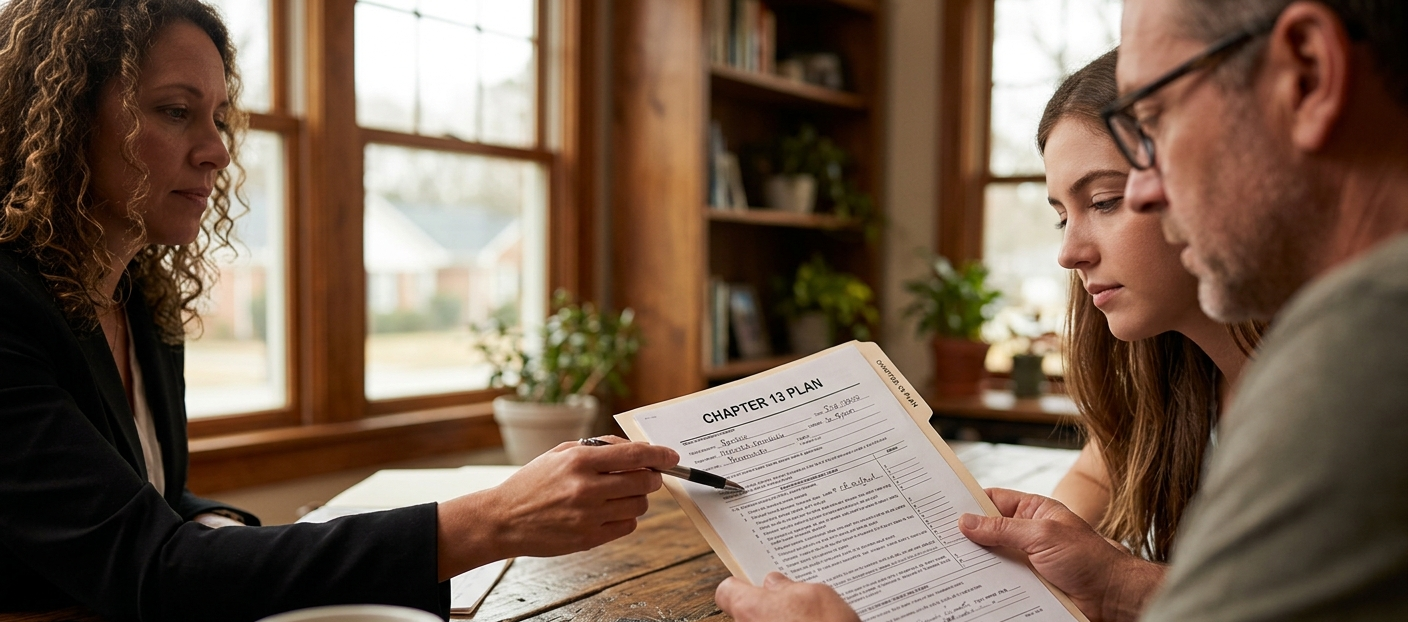
Worried about losing your home? Learn how Chapter 13 bankruptcy can help stop foreclosure, catch up on mortgage arrears, protect your home, and even position you to buy a house in the future.
Understanding How Chapter 13 Bankruptcy Protects Homeowners
One of the most common questions we hear from homeowners is, "Will I lose my house if I file Chapter 13 bankruptcy?" It is an understandable concern. When mortgage payments begin to fall behind, foreclosure notices start arriving, and financial stress becomes overwhelming, many people assume that bankruptcy means surrendering their home.
In reality, the opposite is often true.
Chapter 13 bankruptcy was specifically designed to help individuals reorganize their debts while protecting important assets, including their primary residence. For many New Jersey homeowners, Chapter 13 provides a powerful opportunity to stop foreclosure, catch up on missed mortgage payments, and create a realistic path toward long-term financial stability.
Over the years, we have worked with many clients who initially came to our office believing they had already run out of options. Some had received foreclosure complaints. Others had fallen months behind on their mortgage payments due to job loss, medical issues, divorce, or unexpected financial hardship. In many of these situations, Chapter 13 bankruptcy provided the breathing room necessary to save their homes and regain control of their finances.
Will I Lose My House If I File Chapter 13 Bankruptcy?
In many cases, the answer is no. Chapter 13 bankruptcy allows individuals with regular income to propose a court-approved repayment plan that typically lasts between three and five years. During that time, debtors can repay certain debts while maintaining ownership of their assets.
Under 11 U.S.C. § 1322, Chapter 13 plans may provide for the curing of mortgage arrears within a reasonable period while allowing homeowners to continue making their regular mortgage payments. This means that if you have fallen behind on your mortgage, Chapter 13 may allow you to catch up over time rather than paying the entire delinquency immediately.
Additionally, 11 U.S.C. § 1322(c)(1) provides that homeowners may cure a mortgage default on their principal residence until the property has been sold at a foreclosure sale conducted in accordance with applicable non-bankruptcy law.
As long as the foreclosure sale has not been completed and the debtor remains compliant with the Chapter 13 repayment plan, Chapter 13 often provides a viable path to preserving homeownership.
How Chapter 13 Can Stop Foreclosure
One of the most powerful protections available to debtors is the automatic stay under 11 U.S.C. § 362.
The moment a bankruptcy petition is filed, the automatic stay generally goes into effect and immediately halts most collection activities, including:
- Foreclosure proceedings
- Collection lawsuits
- Wage garnishments
- Bank levies
- Collection calls and letters
For homeowners facing an impending foreclosure sale, this protection can be life-changing. It provides valuable time to reorganize finances and propose a repayment plan that addresses mortgage arrears.
For example, imagine a homeowner who fell six months behind on mortgage payments after suffering a temporary job loss. Without bankruptcy protection, the lender may continue pursuing foreclosure. However, by filing Chapter 13, that homeowner may be able to stop the foreclosure process and repay the arrears through a structured repayment plan while continuing to make ongoing mortgage payments.
Additional information about bankruptcy protections can be found through the United States Courts.
Can I Keep My House If I File Bankruptcy?
Whether you can keep your house depends on several factors, including the type of bankruptcy filed, the amount of equity in the property, and your overall financial circumstances.
Keeping Your Home in Chapter 13
Chapter 13 is generally the bankruptcy chapter most commonly associated with saving homes. It allows debtors to:
- Cure mortgage arrears over time
- Maintain ongoing mortgage payments
- Prevent foreclosure sales
- Reorganize debt into manageable payments
- Protect assets from liquidation
For homeowners experiencing temporary financial hardship, Chapter 13 often provides a practical solution that preserves homeownership while addressing debt.
Keeping Your Home in Chapter 7
Chapter 7 bankruptcy operates differently. Rather than reorganizing debt, Chapter 7 focuses on liquidation.
Whether a debtor can keep a home in Chapter 7 often depends upon available exemptions and the amount of equity in the property. If sufficient exemptions protect the debtor's equity interest, the home may be retained. However, if substantial non-exempt equity exists, a Chapter 7 trustee may seek to liquidate the property for the benefit of creditors.
Because exemption analysis is highly fact-specific and exemption amounts periodically change under federal law, homeowners should consult with experienced bankruptcy counsel before making assumptions about whether their home is protected.
Can You Buy a House While in Chapter 13?
Surprisingly, the answer may be yes. Many people assume that filing Chapter 13 prevents them from purchasing a home until their case is complete. However, purchasing a house while in Chapter 13 bankruptcy is often possible, although court approval is generally required.
According to the New Jersey Bankruptcy Manual § 11.X.B, debtors seeking to purchase real property during a Chapter 13 case must generally demonstrate that the proposed purchase is financially feasible and will not jeopardize the repayment plan. The debtor typically must notify the Chapter 13 Trustee and interested parties regarding the proposed transaction.
Factors commonly considered include:
- Payment history under the Chapter 13 plan
- Income stability
- Debt-to-income ratios
- Affordability of the proposed mortgage
- Overall financial feasibility
While every case is different, purchasing a home during Chapter 13 is not automatically prohibited.
Buying a House After Chapter 13 Bankruptcy
Many people are surprised to learn that purchasing a home after Chapter 13 bankruptcy is often easier than they expected.
Upon successful completion of the Chapter 13 repayment plan and entry of a discharge, debtors are generally free to purchase real property without court approval. In many cases, debtors emerge from bankruptcy in a stronger financial position because they have:
- Eliminated substantial unsecured debt
- Established consistent payment habits
- Improved debt-to-income ratios
- Resolved collection issues
Although a Chapter 13 filing may remain on a credit report for up to seven years, many lenders, including FHA, VA, and conventional mortgage lenders—offer financing opportunities following bankruptcy.
Consumers seeking additional information regarding homeownership and mortgage readiness may find the following resources helpful:
- Consumer Financial Protection Bureau - https://www.consumerfinance.gov/owning-a-home/
- U.S. Department of Housing and Urban Development - https://www.hud.gov/topics/homeownership
Common Myths About Bankruptcy and Homeownership
Myth #1: Filing Bankruptcy Means Losing Everything
This is perhaps the most common misconception. Bankruptcy laws contain numerous protections designed to help individuals preserve assets while obtaining meaningful debt relief.
Myth #2: Chapter 13 Eliminates Mortgage Payments
Chapter 13 generally allows debtors to cure missed mortgage payments over time, but ongoing mortgage payments must typically continue throughout the case.
Myth #3: You Can Never Buy a House Again
Many debtors successfully purchase homes after completing bankruptcy. Bankruptcy often serves as a financial reset rather than a permanent barrier to future homeownership.
Frequently Asked Questions
- Can Chapter 13 stop foreclosure in New Jersey?
- In many cases, yes. Filing Chapter 13 triggers the automatic stay, which generally halts foreclosure proceedings and may allow a debtor to cure mortgage arrears through a court-approved repayment plan.
- Will I lose my house if I am behind on my mortgage?
- Not necessarily. Many homeowners file Chapter 13 specifically because they have fallen behind on mortgage payments. Bankruptcy may provide an opportunity to catch up on missed payments and avoid foreclosure.
- Can I keep my house if I file bankruptcy?
- In many situations, yes. Chapter 13 was specifically designed to help individuals reorganize debt while retaining important assets, including their homes.
- Can you buy a house while in Chapter 13?
- Possibly. Purchasing a home during Chapter 13 generally requires Bankruptcy Court approval and must be financially feasible.
- How soon can I buy a house after Chapter 13 bankruptcy?
- Many debtors become eligible for mortgage financing after completing their Chapter 13 plan and receiving a discharge. Eligibility requirements vary among lenders.
- Can I refinance my mortgage during Chapter 13?
- Possibly. Refinancing often requires Bankruptcy Court approval and coordination with the Chapter 13 Trustee.
- Does Chapter 13 eliminate my mortgage?
- No. Chapter 13 generally helps debtors catch up on missed mortgage payments while continuing regular mortgage obligations.
Speak With an Experienced New Jersey Bankruptcy Attorney
If you are asking yourself, "Will I lose my house if I file Chapter 13?", the most important thing to remember is that bankruptcy may provide more options than you realize.
Every situation is different. The earlier you seek legal guidance, the more opportunities may be available to stop foreclosure, protect your home, and build a path toward financial recovery.
At Scura, Wigfield, Heyer, Stevens & Cammarota LLP, we have helped countless New Jersey residents navigate financial hardship and explore solutions tailored to their unique circumstances. Whether you are facing foreclosure, struggling with mortgage arrears, or simply seeking answers, our team is ready to help.


