
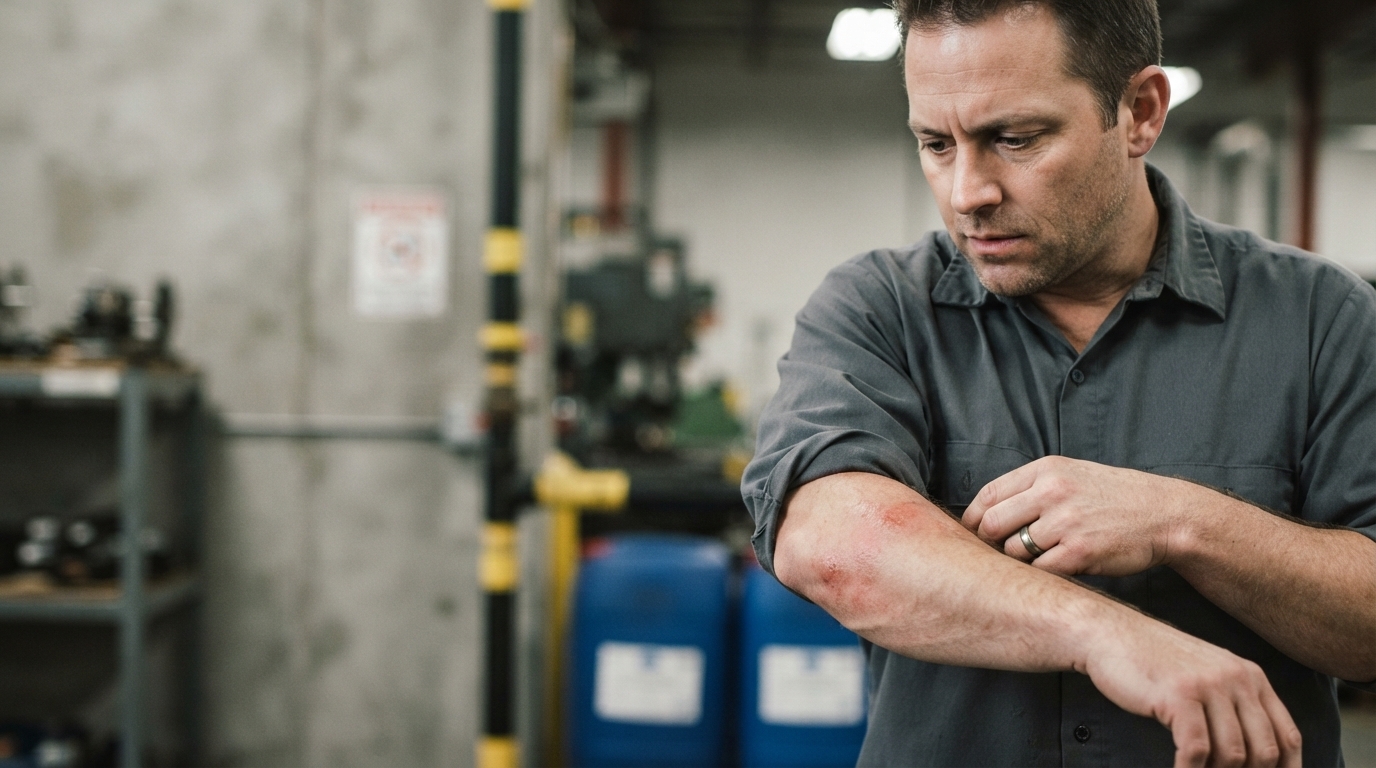
A work-related skin injury is any dermatologic condition caused or aggravated by job duties, exposures, or workplace accidents. In New Jersey, the worker’s compensation system generally covers these injuries when they arise out of and during the course of employment.
New Jersey law covers occupational diseases and toxic exposure under its workers’ compensation system, provided you can prove a direct link between your job duties and the illness. Because chemical exposure claims often take months or years to manifest (unlike sudden accidents), staying informed, and with clinical guidance is essential.
Common Occupational Skin Injuries
- Thermal and chemical burns from heat sources, steam, or caustic substances
- Contact dermatitis from solvents, latex, adhesives, or industrial cleaners
- Lacerations and puncture wounds that scar
- Sun-related skin damage in outdoor occupations
- Infections following workplace cuts or abrasions
What New Jersey Workers’ Compensation Typically Covers
Coverage commonly includes authorized medical treatment, surgical and laser treatment, prescribed medications, follow-up visits. Your provider may also document permanent impairment, including scarring, which can factor into a claim. Coverage specifics vary, so consult your provider and claims representative about your situation.
Employee Notification
New Jersey law requires notifying your employer of a work injury as soon as possible. Delaying notification can raise questions about whether the injury truly happened at work. Reporting quickly creates an early record, while waiting may weaken the timeline that connects your injury to your job. Always document the date, time, and circumstances when you report.
Crucial Steps for Chemical Exposure Claims in New Jersey
- Establish the Timeline: Unlike sudden slip-and-falls, chemical exposure relies on proving an “occupational disease” tracking pattern under New Jersey law. Document the exact chemicals (via Safety Data Sheets, SDS, if available) and the duration of your daily exposure.
- Seek Authorized Treatment: Under New Jersey law, the employer or their insurance carrier generally has the right to select the treating physician. Make sure your exposure symptoms are evaluated by an authorized provider to guarantee medical bills are covered.
- Mind the Statute of Limitations: For occupational diseases, New Jersey requires you to file a claim within two years from the date you first became aware of the condition and its relationship to your employment.
Several factors can influence how a workers’ compensation claim involving a workplace skin injury or chemical exposure is evaluated under New Jersey law. These include:
- What type of chemical or substance were you exposed to (e.g., solvents, asbestos, mold, heavy metals)?
- Are you dealing with an acute incident (like a spill or chemical burn) or a chronic, long-term exposure illness?
- Has a worker’s comp claim already been filed or denied by your employer’s insurance provider?
- If you have suffered a workers compensation skin injury in NJ, you are likely weighing your options: how to get treated, who should treat you, and how to protect your claim from denial. Whether you work in a warehouse in Passaic County, a kitchen in Essex County, or a manufacturing plant in Hudson County, occupational skin injuries are common and often more complex than they appear.
Accurate burn severity grading guides treatment decisions, and early dermatologic evaluation supports healing and long-term scar planning.
Thermal vs. Chemical Burns
Thermal burns result from heat, steam, or flame, while chemical burns stem from caustic or corrosive substances. The CDC notes that immediate irrigation is often critical for chemical exposures. Burns are typically graded by depth (superficial, partial-thickness, full-thickness), which influences whether topical care or surgical intervention is appropriate.
Long-Term Scar Considerations
Burns and chemical injuries can leave lasting scars, including raised or discolored tissue. Early intervention may improve scar outcomes, though results vary by individual. Your provider can explain scar management options with a realistic timeline. Consistent follow-up helps your care team track how the scar evolves.
Contact Scura Law Today to Schedule a Free Case Consultation
If you sustained a work-related injury in New Jersey, you should contact the attorneys at Scura, Wigfield, Heyer, Cammarota, & Gonzalez, LLP at (973) 696-8391.


