
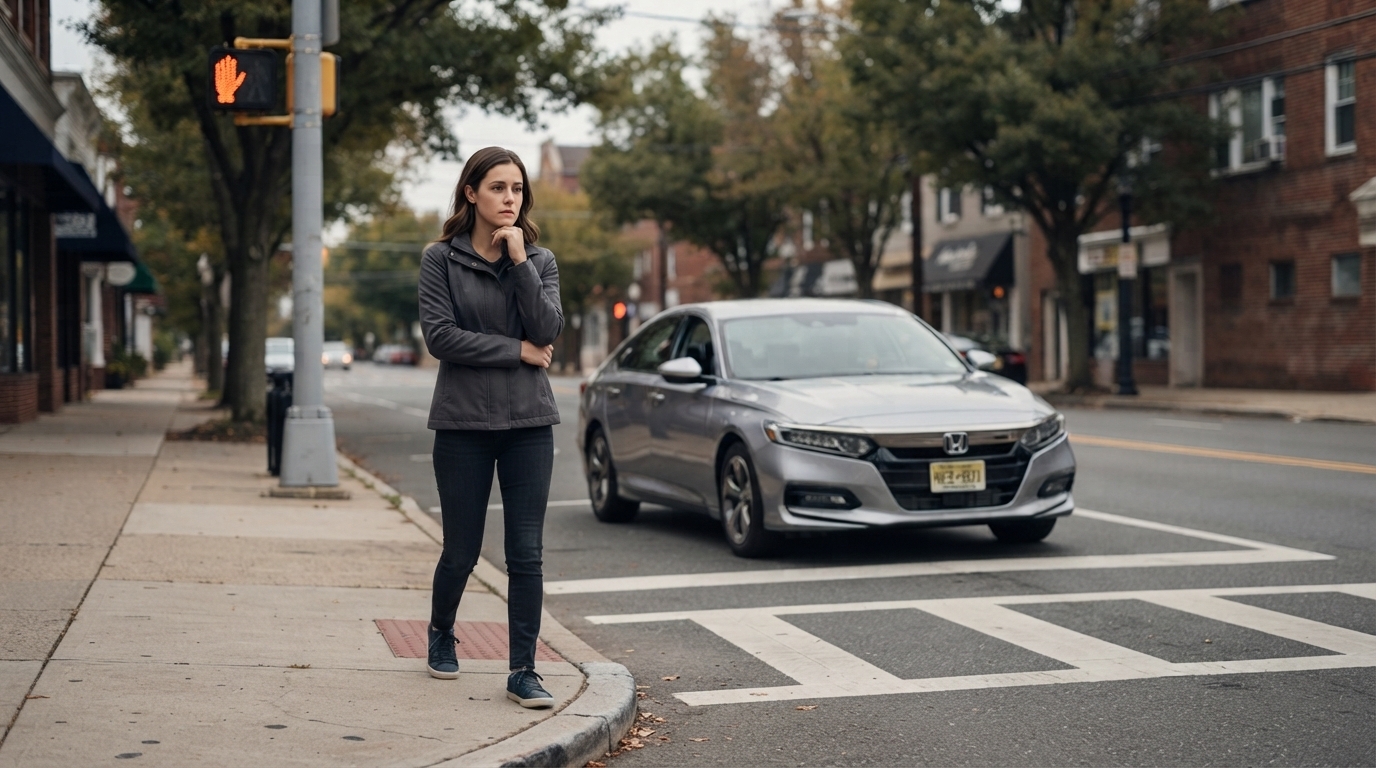
The ambulance bill usually shows up first. Then the emergency room statement, the orthopedist, and a physical therapy office asking a question you can't answer: "Which insurance is primary?" If you were hit by a car while walking in New Jersey and you don't own a car, that question can stop you cold. You don't have auto insurance. So who is supposed to pay?
The Short Answer
In most cases, your medical bills still get paid through New Jersey's no-fault system, even if you have never owned a car. Here's the order:
- If you or a relative you live with has an auto policy, that policy's Personal Injury Protection (PIP) coverage pays first.
- If nobody in your household insures a car, PIP on the vehicle that hit you generally pays.
- If no policy applies (the car was uninsured, for example), a state fund run by the New Jersey Property-Liability Insurance Guaranty Association can step in, but only if you file a notice within 180 days of the accident.
Separately, you can usually bring a claim against the driver for pain and suffering and for the losses PIP doesn't cover.
That's the outline. The details are where people get hurt a second time, so let's go through them one at a time.
Why New Jersey Sends a Pedestrian's Medical Bills to Car Insurance
Most people assume the driver who hit them pays their medical bills. In New Jersey, that isn't how it works, at least not at first. We're a no-fault state. Every standard auto policy here carries PIP, which pays for accident-related medical treatment no matter who caused the crash.
The statute that creates PIP, N.J.S.A. 39:6A-4, expressly covers people injured "as a pedestrian" by an automobile. On a standard policy, medical expense benefits can run up to $250,000 per person per accident.
So whether car insurance covers a pedestrian isn't really in doubt. What you need to know is whose car insurance pays, and in what order. Get that wrong and you can spend months bouncing between adjusters while your bills go to collections.
The Order New Jersey Follows to Pay a Pedestrian's Medical Bills
1. Your Own Auto Policy, If You Have One
If you have a car insurance policy in your name, your own PIP is primary, even though your car was nowhere near the crash. N.J.S.A. 39:6A-4.2 makes the named insured's PIP the primary coverage.
That also means the choices you made when you bought the policy now matter a great deal. Your PIP limit may be lower than you remember. You may have chosen to make your health insurance primary. You may have picked the "limited right to sue" option. We'll come back to that last one, because it affects your claim against the driver.
Most people reading this don't have a policy of their own, though. So keep going.
2. A Policy Owned by a Relative You Live With
This is the step people forget, and it's often the one that pays.
Under the same statute, the named insured's PIP is also primary for any relative who lives in that household and doesn't have an auto policy of their own. If you live with your mother, your adult son, or your spouse, and that person insures a car, you are very likely covered under their policy as a pedestrian.
There are two catches. First, you generally take that policy as it is: its PIP limit, its deductible, and, in most cases, its right-to-sue election. Second, "resident relative" means a relative who actually lives with the policyholder. A roommate or a friend you're staying with doesn't count, and an adult child who moved out years ago generally doesn't either. Insurers investigate residency, so tell the truth about where you live from the very first phone call. A residency answer that changes halfway through a claim is a gift to the adjuster looking for a reason to deny.
3. The Policy on the Car That Hit You
If no one in your household insures a car, you generally look to PIP on the vehicle that struck you. Section 39:6A-4 extends PIP to pedestrians hit by the policyholder's automobile, so the driver's insurer is the one to notify.
You'll need the police report, the driver's name, and the insurance information exchanged at the scene. If you were taken away in an ambulance and never got any of that, the police report usually has it. Get the report number as soon as you can and open the PIP claim promptly.
Hit by a Truck, Bus, Van, or Motorcycle?
The word "automobile" has a narrow meaning in New Jersey's no-fault law, so commercial trucks and similar vehicles follow a different statute. N.J.S.A. 17:28-1.3 requires every liability policy issued in New Jersey on a motor vehicle that isn't an "automobile" (including motorcycles and motorized bicycles) to provide PIP benefits to pedestrians injured by that vehicle.
In plain terms, being hit by a delivery truck or a motorcycle doesn't leave you without medical coverage just because the vehicle wasn't someone's family sedan. The insurer for that vehicle is usually your next stop.
4. The Unsatisfied Claim and Judgment Fund
When none of those options apply (the most common example is an uninsured car), New Jersey has a safety net: the Unsatisfied Claim and Judgment Fund. It was created in 1952 for victims of hit-and-run drivers and uninsured motorists. Since January 1, 2004, it has provided pedestrian PIP for people hit by private passenger cars when no other coverage is available. The New Jersey Property-Liability Insurance Guaranty Association (NJPLIGA) runs it.
The Fund's pedestrian PIP benefits come from N.J.S.A. 39:6-86.1, and they look like this:
- Medical expenses up to $250,000 per person per accident, subject to a $250 deductible and a 20% copayment on benefits between $250 and $5,000.
- Income continuation of up to $100 a week, with a total cap of $5,200.
- Essential services (help with household tasks you can't do while injured) of up to $12 a day, capped at $4,380.
- Funeral expenses of up to $1,000.
Look closely at those numbers. The medical coverage is real and can make an enormous difference. The wage benefit is not. If you were bringing home $1,200 a week before the crash, $100 a week won't keep the lights on. That gap is one of the biggest reasons a claim against the driver matters.
The 180-Day Deadline That Quietly Ends Claims
If your claim ends up with the Fund, there's a deadline that catches far too many people. Under N.J.S.A. 39:6-65, you must give the Fund notice within 180 days after the accident. The statute calls it a "condition precedent," which is legal shorthand for this: miss it, and you lose the right to apply.
The exceptions are narrow. One covers someone who was physically incapable of giving notice in time. Another applies when you notify the Fund within 15 days of learning that an insurer disclaimed coverage for your claim. That 15-day window is short, and denial letters have a way of sitting unopened on the kitchen counter.
NJPLIGA's own claim FAQ says the process starts with a Notice of Intention to Make a Claim, filed within 180 days. It lists the paperwork it expects:
- A completed PIP application
- A notarized Affidavit in Support of UCJF Eligibility
- A Certificate of Medicare Eligibility
- A HIPAA authorization
- A Social Security number
My advice is simple. If there's any real chance the driver was uninsured, don't wait for the driver's insurance company to tell you "no" before you protect your rights with the Fund. Filing a timely notice costs you nothing. Missing the deadline can cost you everything the Fund would have paid.
Hit by an Uber or Lyft Driver
Rideshare crashes used to sit in a gray area. A July 2026 Appellate Division decision may have cleared much of it up.
In Boone v. Unsatisfied Claim and Judgment Fund (Docket No. A-2772-24, decided July 24, 2026), a pedestrian with no car and no insured household member was allegedly struck by a driver who was carrying a Lyft passenger at the time. Lyft's insurer denied PIP, arguing that the state law governing rideshare companies didn't require it. The Fund denied him too. According to published reports of the decision, the court called the case one of first impression. It held that the rideshare company's liability policy had to provide pedestrian PIP, and it affirmed a trial court order requiring the insurer to reform its policy to include that coverage.
A word of caution. At the time of writing, the decision has been approved for publication but it has not been officially published yet. The facts also mattered: the driver was logged in to the lyft app and carrying a passenger. Still, the takeaway is practical. If a rideshare insurer tells you pedestrians aren't covered, don't take that answer at face value.
Hit and Run: You Still Have Options
Not knowing who hit you is frightening, but it doesn't mean you're on your own. The Fund exists in large part because of hit-and-run crashes. Report the crash to police right away, get medical care, and keep every record. If anyone in your household has an auto policy, that policy may come into play first, and its uninsured motorist coverage can matter for your injury claim. If no policy applies, the Fund's notice deadlines apply, so move quickly.
What About Health Insurance, Medicare, and Medicaid?
Health insurance can still play a role. It may pick up bills that PIP doesn't cover, or bills that come after PIP benefits run out. If you have your own auto policy, you might have chosen to make your health insurance primary for auto injuries.
The New Jersey Department of Banking and Insurance's 2026 Auto Insurance Buyer's Guide points out an important limit: Medicare and Medicaid can't be used for that "Health Care Primary" option. The same guide explains the PIP limit choices drivers make, which can be as low as $15,000.
One more thing people don't see coming: health plans and government programs that pay accident bills often have a right to be repaid out of any settlement or verdict. That doesn't mean you shouldn't use them. It means those liens have to be identified and handled correctly before a case resolves, or they'll eat into your recovery.
PIP Pays the Bills. It Doesn't Make You Whole.
PIP and the Fund exist to keep medical care flowing. They don't pay for pain, for the months you couldn't pick up your kids, or for the job you may not be able to go back to. Those losses come from a claim against the at-fault driver, usually paid through that driver's bodily injury liability coverage. Four rules shape that claim.
The Verbal Threshold (Limited Right to Sue)
If you're covered under your own policy or a resident relative's policy, and that policy has the "limited right to sue" option, you can recover for pain and suffering only if your injury falls into one of six categories under N.J.S.A. 39:6A-8(a):
- Death
- Dismemberment
- Significant disfigurement or significant scarring
- A displaced fracture
- Loss of a fetus
- A permanent injury, meaning a body part or organ that hasn't healed to function normally and won't with further treatment
You also need a physician's certification, based on objective clinical evidence, served within 60 days after the defendant answers the complaint.
If nobody in your household has an auto policy, you never made that election. In that situation the threshold often isn't the obstacle it would be for someone who chose limited tort, but it depends on the facts. It's one of the first things we look at.
If You Own a Car That Isn't Insured
New Jersey is tough on uninsured vehicle owners. N.J.S.A. 39:6A-4.5(a) takes away the right to sue for someone injured while operating an uninsured automobile. Walking down the street isn't operating a car. But owning an uninsured car can complicate eligibility for benefits, so tell your lawyer up front rather than letting the insurer discover it later.
Your Share of Fault
Insurers love to argue that a pedestrian was jaywalking, wearing dark clothes, or looking at a phone. Under New Jersey's comparative negligence statute, N.J.S.A. 2A:15-5.1, you can recover as long as your fault isn't greater than the driver's, and your damages are reduced by your percentage of fault. Being partly at fault doesn't end your case. Letting the insurer write the story of the crash before you've gathered the evidence can.
The Two-Year Deadline
Most personal injury lawsuits in New Jersey must be filed within two years under N.J.S.A. 2A:14-2. If a town, county, or state vehicle was involved, much shorter notice deadlines apply. Don't let the PIP process lull you into thinking the clock on your injury claim is on hold. It isn't.
Mistakes That Cost Injured Pedestrians Money
Most of the damage we see happens in the first few weeks, usually because someone made a reasonable assumption that turned out to be wrong.
The most common one is assuming that having no car means having no coverage. People put ER bills on credit cards, skip follow-up care because they're afraid of the cost, or let providers send accounts to collections. Meanwhile there was a household policy, or PIP on the striking vehicle, that should have been paying all along.
Close behind is giving a recorded statement to the driver's insurance company before talking to anyone. That adjuster's job is to limit what the company pays. Questions about where you were looking, what you were wearing, and how fast you were walking aren't small talk.
Then there are gaps in treatment. If your back still hurts but you stop going to therapy for two months because of a paperwork fight, the insurer will argue you must have healed. Keep treating, keep your appointments, and keep a simple journal of how the injury affects your days.
And of course, missing the 180-day Fund deadline because everyone assumed the other driver's insurance would come through.
How Scura, Wigfield, Heyer, Cammarota & Gonzalez Can Help
When you're hurt, you should be focused on getting better, not on figuring out which of four possible payers owes you money. Our job is to take that off your plate. We identify every policy that could apply, file the PIP application and any Notice of Intention with the Fund on time, push back on denials, and build the injury claim against the driver from day one.
We also prepare cases differently than many firms. We roundtable cases with retired judges, and we practice them in our own mock courtroom, so we know how a case is likely to look to a jury long before an insurance company has to decide whether to pay it fairly.
If you were hit while walking anywhere in New Jersey, learn more about how our New Jersey pedestrian accident lawyers handle these cases, or call us at (973) 786-1582 for a free consultation. We have offices in Wayne, Hackensack, Newark, Secaucus, and Clifton.
Frequently Asked Questions
- Can I get PIP benefits if I don't own a car?
- Usually, yes. If a relative you live with insures a car, their PIP generally covers you as a pedestrian. If not, PIP on the vehicle that hit you generally applies. If no policy applies, the Unsatisfied Claim and Judgment Fund may provide benefits.
- Who pays my medical bills if the driver who hit me was uninsured?
- If nobody in your household has an auto policy, the Unsatisfied Claim and Judgment Fund, run by NJPLIGA, may pay up to $250,000 in medical expenses, subject to a deductible and copayment. You must file a Notice of Intention within 180 days of the accident.
- How long do I have to file a claim with NJPLIGA after a pedestrian accident?
- The notice must be given within 180 days of the accident under N.J.S.A. 39:6-65. There are narrow exceptions for people who were physically unable to give notice, and for notice given within 15 days of learning that an insurer disclaimed coverage.
- Does my health insurance pay first if I'm hit by a car while walking in New Jersey?
- Generally, auto PIP is the first place to look. Health insurance may pay first only if you chose the Health Care Primary option on your own auto policy, and Medicare and Medicaid can't be used for that option. Health insurance may also cover bills after PIP runs out.
- Can I sue the driver who hit me as a pedestrian?
- Yes. PIP covers medical bills, but you can bring a separate claim against an at-fault driver for pain and suffering, wage loss beyond PIP, and other damages. If you're covered under a policy with the limited right to sue option, you'll need to meet the verbal threshold. Most lawsuits must be filed within two years.
- Does PIP pay lost wages for an injured pedestrian?
- PIP includes income continuation benefits, but the amount depends on the coverage that applies. Through the Unsatisfied Claim and Judgment Fund, it's capped at $100 a week and $5,200 total, which is why a separate claim against the driver is often essential.
- What if I was hit by an Uber or Lyft driver and have no car insurance?
- A July 2026 Appellate Division decision, Boone v. Unsatisfied Claim and Judgment Fund, held that a rideshare company's liability policy must provide PIP to an uninsured pedestrian struck by a driver carrying a passenger. Have a lawyer review any rideshare denial before you accept it.


