
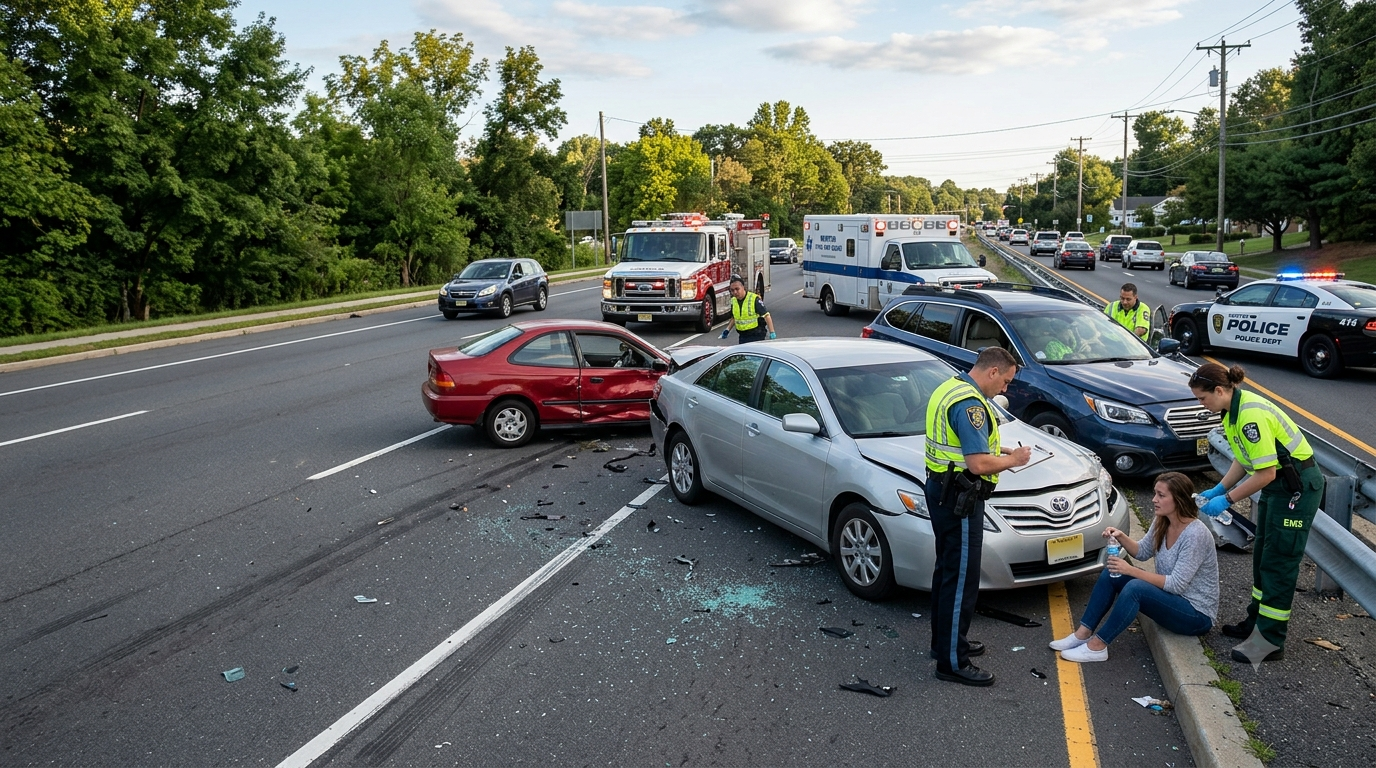
Imagine you are seriously injured in a car accident through no fault of your own. You do everything right: you maintain insurance, seek medical treatment, and pursue a claim against the at-fault driver. Then you discover that the driver who caused the crash either carried no insurance at all or lacked sufficient coverage to fully compensate you for your injuries. That is precisely why many New Jersey drivers purchase uninsured and underinsured motorist ("UM/UIM") coverage: to protect themselves when the responsible driver does not.
Unfortunately, obtaining the benefits you paid for is not always straightforward. For years, injured drivers in New Jersey were often left at the mercy of their own insurance companies after suffering serious injuries caused by uninsured or underinsured motorists. Even where liability was clear and the injuries were significant, insurance carriers frequently delayed claims, prolonged negotiations, or refused to make reasonable settlement offers to their own customers, knowing that the consequences for doing so were relatively limited
That changed in 2022 when New Jersey enacted the New Jersey Insurance Fair Conduct Act (“NJIFCA”), a law that gave consumers the ability to sue their own insurance company for unreasonable delays or denials involving UM/UIM claims. The act created powerful new remedies for insured drivers, including the possibility of recovering attorney’s fees, litigation costs, interest and damages of up to three times the policy limits in certain circumstances.
Although the NJIFCA significantly expanded the rights of insured drivers, many questions remain regarding how those rights would be enforced in practice. For example, could an injured driver pursue an NJIFCA claim while the underlying UM/UIM dispute is still contested due to there being questions of issues such as causation and permanency of the injury? And if so, must such a claim always be paused or "stayed" until that underlying UM/UIM dispute is resolved?
A recent Appellate Division decision provides some meaningful guidance on both questions.
Two Underinsured Motorist Claims That Led to an Important Appellate Division Decision
The Appellate Division’s decision arose from two companion cases that the Court reviewed contemporaneously: Noah Tenenbaum v. Allstate Ins. Co., Docket No. A-0742-25 and Lindsay Cirelli v. Government Employees Ins. Co., Docket No. A-0988-25. In both cases, New Jersey drivers were seeking UM/UIM benefits from their own insurance companies after being injured in automobile crashes.
Noah Tenenbaum v. Allstate Ins. Co
In the first case, an injured driver alleged that his insurance company wrongfully delayed and denied payment of his UIM claim. He asserted claims under both traditional New Jersey bad faith law and the NJIFCA, which the insurance company sought to dismiss the injured party’s until the underlying UM/UIM dispute was resolved. The driver conceded that his common law bad faith claim could be stayed, but argued that his NJIFCA claim should proceed because it was a separate statutory cause of action. The trial court agreed, concluding that the NJIFCA created an independent cause of action and that forcing such a claim to wait until the underlying UM/UIM dispute was resolved would be "nonsensical and counterintuitive." However, prior to the Appellate Division reviewing the case on appeal, the parties ultimately resolved the underlying UIM claim, rendering the dispute moot.
Lindsay Cirelli v. Government Employees Ins. Co.
The second case involved a more actively disputed UIM claim. Like the first plaintiff, the injured driver alleged that her insurance company improperly delayed and mishandled her claim for benefits. Unlike the first case, however, the underlying UIM dispute remained unresolved, and the plaintiff sought extensive discovery relating to the insurer's alleged bad faith conduct while that dispute was still ongoing.
The Trial Court originally ruled that the NJIFCA claim should proceed, again reasoning that it was a separate statutory cause of action that should not automatically be delayed simply because the underlying UIM claim remained pending. However, the Appellate Division disagreed. While again recognizing that NJIFCA claims are distinct causes of action, the Court held that the NJIFCA claim should be stayed until the underlying UIM dispute was resolved in order to promote judicial economy and avoid potentially unnecessary discovery if the insurer prevailed on the underlying claim.
Importantly, however, the court emphasized that its ruling was limited to the specific case before it. In this case, on top of the plaintiff seeking extensive discovery to prove the insurance carrier’s bad-faith, the insurer disputed its obligation to pay UIM benefits based on still remaining issues of causation and permanency. The Court recognized that some UM/UIM cases involve heavily disputed issues of liability, causation, permanency, and damages, while others involve fewer disputed issues and may support expedited proceedings.
The Court thus expressly stated that a different set of facts could lead to a different result.
Key Takeaways from the Court’s Decision
While the Appellate Division ultimately sided with the insurance company in the second case, it is important to note that the Court did not weaken the NJIFCA itself.
One of the most significant aspects of the decision from the perspective of injured policyholders was the court’s express recognition that NJIFCA claims are separate and distinct causes of action from both the underlying UM/UIM claims and the traditional New Jersey common law bad-faith claims. The Court specifically rejected the insurer’s argument that the NJIFCA was merely a restatement of existing bad-faith law and acknowledged that NJIFCA created its own independent remedies and protections for consumers.
The Court was also careful not to create a blanket rule requiring every NJIFCA claim to be stayed until the underlying UM/UIM dispute is resolved. To the contrary, the Court emphasized that severance and stay decisions are highly discretionary and depend on the specific facts of each case. The Appellate Division identified several factors that could affect whether a stay is appropriate, including:
- whether the plaintiff asserted only an NJIFCA claim or also included traditional bad faith claims;
- the complexity of the underlying UM/UIM dispute;
- the type and scope of the discovery being requested; and
- the overall factual circumstances of the case itself.
In other words, the Appellate Division made clear that this decision was not intended to automatically prevent injured drivers from pursuing NJIFCA claims while their UM/UIM cases remain pending.
What This Means for Injured Drivers in New Jersey
For injured New Jersey drivers, the NJIFCA remains a powerful consumer protection statute. Because the Appellate Division confirmed that claims under NJIFCA are separate and distinct causes of action, insurance companies cannot simply ignore or indefinitely delay valid UM/UIM claims without potential consequences.
To be sure, the Court recognized that in certain cases, particularly where liability, causation, or damages remain heavily disputed, a bad faith claim may need to wait until the underlying UM/UIM dispute is resolved. However, the Court was equally clear that its ruling was limited to the specific facts before it and that different circumstances could lead to a different result.
The decision therefore should not be viewed as a victory for insurance companies seeking to delay claims. Rather, it provides guidance on when NJIFCA claims should proceed while reaffirming that insurers remain accountable when they unreasonably delay, deny, or mishandle valid claims. As New Jersey courts continue to interpret the NJIFCA, insurance carriers will increasingly find it difficult to hide behind procedural delays when their obligation to pay benefits is clear.
How Scura Law Can Help
The Appellate Division's recent decision demonstrates that NJIFCA litigation remains a rapidly evolving area of New Jersey law. As this decision illustrates, issues involving stays, discovery, and the timing of bad faith claims often depend on the specific facts of the case. In many instances, the dispute is no longer with the driver who caused the crash, but with your own insurance company.
At Scura Law, we prepare every case involving UM/UIM claims or causes of action alleging violations of the NJIFCA as if it will ultimately be tried before a jury. Our attorneys work closely with medical experts, economists, accident reconstructionists, and insurance professionals to develop evidence regarding both the underlying injury claim and the insurer's handling of that claim.
We are experienced in navigating the evolving legal landscape surrounding insurance bad faith claims under NJIFCA, and regularly evaluate when an insurer's conduct crosses the line from a legitimate coverage dispute into an unreasonable delay or denial that may give rise to liability under the act. When appropriate, we do not hesitate to pursue claims under NJIFCA to hold insurance companies accountable and seek the additional remedies the Legislature made available to injured policyholders.
We also aggressively oppose unnecessary delays and work to keep our clients' claims moving forward as efficiently as possible, particularly where an insurer seeks to stay or postpone a valid NJIFCA claim. Thorough preparation is critical in these cases, especially where insurance companies contend that legitimate disputes regarding liability, damages, causation, or coverage justify delaying payment of benefits. Distinguishing between a genuine dispute and an unreasonable delay is often at the forefront of how we approach NJIFCA litigation cases.
Our In-House Mock Courtroom
What truly distinguishes our firm, is how we test those cases before trial and where appropriate even before filing suit. Through mock jury exercises conducted in our in-house courtroom, we present the facts of a case to real people and evaluate how they react to the conduct of the insurance company, the reasonableness of the settlement offers that were made, and the impact the delay or denial had on our client.
This process allows us to identify the arguments that resonate most strongly with jurors and refine our trial strategy long before we ever enter a courtroom.
Strategic Guidance from Two Retired Presiding Judges
Our attorneys also regularly collaborate with former Presiding Civil Judges Thomas Brogan, J.S.C. (Ret.), and Randal Chiocca, J.S.C. (Ret.). Their decades of judicial experience provide invaluable insight into how courts are likely to evaluate discovery disputes, severance motions, bad faith allegations, and other issues that can frequently arise in litigation involving UM/UIM claims and the NJIFCA. Their guidance helps us assess case value, anticipate legal challenges, and develop strategies that have been tested from both the advocate's and the judge's perspective
Contact Scura Law for a Free Consultation
Cases involving UM/UIM coverage disputes and insurance bad faith claims are often far more complicated than many injured drivers initially realize. Insurance companies frequently challenge serious injury claims, dispute damages, and aggressively litigate issues involving coverage and claim handling practices.
At Scura, Wigfield, Heyer, Cammarota & Gonzalez LLP, our attorneys regularly represent injured individuals in complex personal injury and insurance litigation matters throughout New Jersey. We closely monitor developing appellate decisions like this one because they directly affect the rights of injured policyholders and the obligations of insurance companies handling UM/UIM claims.
If your insurance company has delayed, denied, or improperly handled your UM/UIM claim, our office can evaluate your case and help you understand your rights under New Jersey law.


