
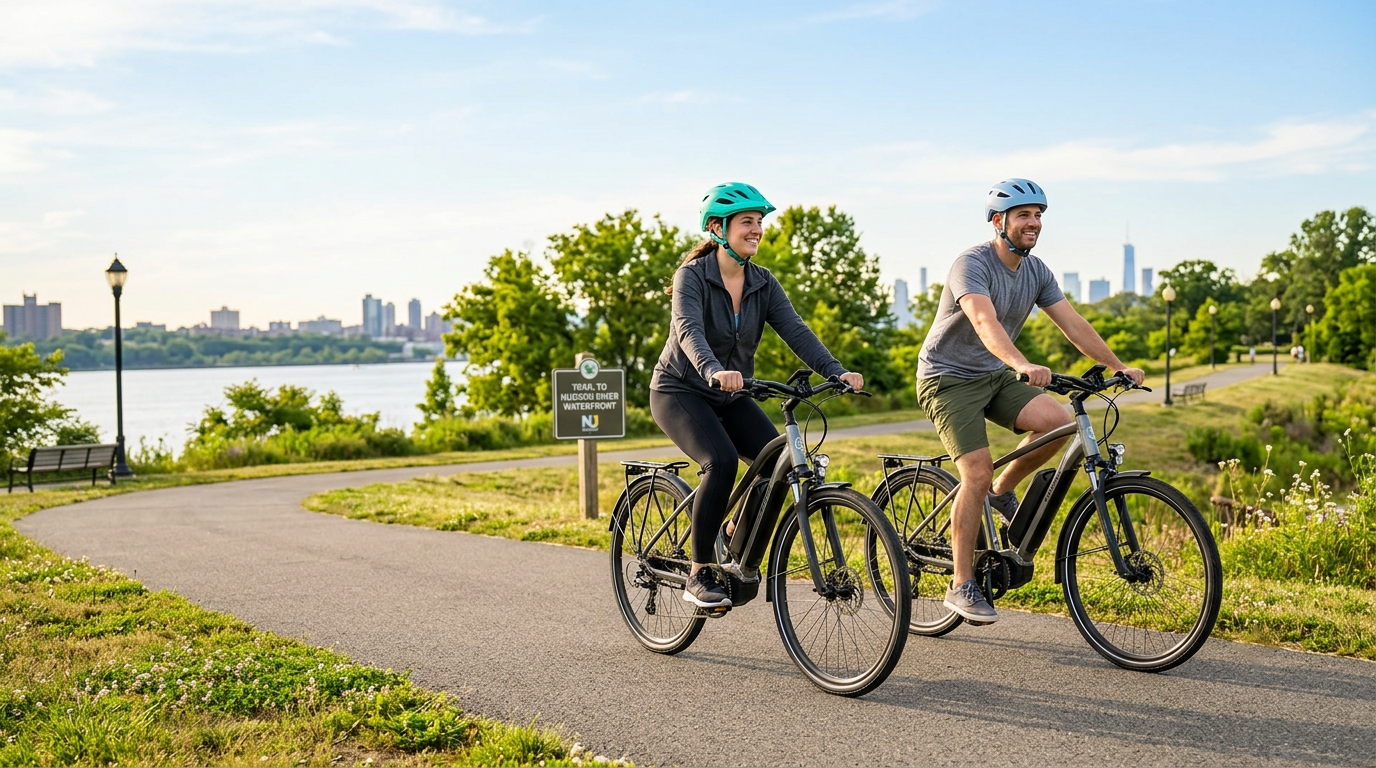
E-bikes have become increasingly common throughout New Jersey. They are used for commuting, deliveries, recreation, transportation around shore towns, and getting around congested cities where parking and traffic can make driving difficult. For many people, e-bikes are convenient, affordable, and fun. They can also be an important form of transportation for people who do not own a car or who simply want an easier way to get from place to place.
But as e-bikes have become more popular, they have also raised serious safety concerns. E-bike riders are often sharing the road with cars, trucks, buses, and motorcycles. Some e-bikes can travel quickly, accelerate faster than expected, and appear suddenly in places where drivers and pedestrians may not anticipate them. When a crash happens, the injuries can be severe.
That is part of why New Jersey has now changed how it regulates e-bikes.
In January 2026, former Governor Phil Murphy signed S4834/A6235 into law, creating new requirements and classifications for e-bike riders in New Jersey. The law has been described by some as one of the most restrictive e-bike laws in the country, and it significantly changes the way New Jersey treats many e-bikes. The New Jersey Motor Vehicle Commission has stated that the new e-bike requirements become effective in July 2026.
For riders, parents, drivers, delivery workers, businesses, and anyone injured in an e-bike accident, these changes matter.
What is New?
The biggest change is that New Jersey is no longer treating many e-bikes the way casual riders may have previously understood them. Under the new law and MVC guidance, what is commonly referred to as an “e-bike” now includes different categories of devices with different legal requirements.
In plain English, this means the law now draws important distinctions based on how the device operates, how fast it can go, whether it is pedal-assisted, whether it has a throttle, and whether it falls into the category of a low-speed electric bicycle, motorized bicycle, electric motorized bicycle, or something else entirely.
Before getting into the registration, licensing, and insurance requirements, it is helpful to understand the basic categories of e-bikes.
Low-Speed Electric Bicycle
A low-speed electric bicycle is a bicycle with fully operable pedals and an electric motor that provides assistance only while the rider is pedaling and stops providing assistance once the bicycle reaches 20 miles per hour. In other words, this is a pedal-assist e-bike that stops providing assistance once the bicycle reaches 20 miles per hour.
Motorized Bicycle
A motorized bicycle is broader than the above two classifications. Under the new law, it can include a pedal bicycle equipped with certain types of helper motors, including:
- A helper motor smaller than 50ccs or 1.5 brake horsepower.
- An electric motor that provides assistance when the rider is pedaling or that, through the use of a throttle, can exclusively propel the bicycle to a speed of not more than 15 miles per hour.
- An electric helper motor that provides assistance when the rider is pedaling and has a maximum speed between 21-28 miles per hour.
- An electric motor that can propel the bicycle in excess of 15 miles per hour through the use of a throttle, and has a maximum motor-powered speed of no more than 28 miles per hour.
While these definitions may sound technical, they matter. The classification of the e-bike can affect whether it must be registered, whether the rider needs a license, whether insurance is required, where the device can be operated, and how an accident claim is evaluated.
Registration, Licensing, and Insurance Requirements
Under the new law, to operate an e-bike in New Jersey, a person must be at least 15 years old and must have either an e-bike license or a valid driver’s license. E-bikes must also now be registered with the New Jersey Motor Vehicle Commission.
However, the insurance requirement is not the same for every e-bike. The MVC states that only motorized bicycles are required to have insurance coverage. Low-speed electric bicycles do not require insurance, but they still must be registered with the MVC.
That distinction is important. It would be too broad to say that every e-bike in New Jersey must have insurance. The more precise way to say it is this: under the new law and MVC’s current guidance, e-bikes must be registered, but only motorized bicycles require insurance. Low-speed electric bicycles must be registered, but they do not require insurance.
Age Restrictions
The new law also creates age-based restrictions.
If you are under 15 years old, you may not operate a low-speed electric bicycle or motorized bicycle in New Jersey.
If you are 15 or 16 years old, you may operate a low-speed electric bicycle or motorized bicycle only if you have a valid motorized bicycle license or permit issued by the NJMVC.
If you are 17 or older, you may operate a low-speed electric bicycle or motorized bicycle only if you have a valid basic driver’s license, motorized bicycle license, or motorized bicycle permit.
There is one notable exception for certain rented low-speed electric bicycles. If you are renting a low-speed electric bicycle from a company operating shared low-speed electric bicycles under a contract with a local government, you do not need a driver’s license or motorized bicycle license/permit, provided the company requires riders to be at least 16 years old.
Reflectors and Modification Kits
The law also includes safety-related requirements and restrictions.
If you operate a low-speed electric bicycle from dusk to dawn, the bicycle must have a reflector installed.
The law also prohibits selling or offering for sale modification kits designed to turn a low-speed electric bicycle into a motorized bicycle or an electric motorized bicycle.
That matters because modified e-bikes can create serious safety issues. A bike that was originally designed and sold as a low-speed pedal-assist bicycle may become far more dangerous if modified to travel faster or operate differently than intended. After an accident, those modifications may also become important evidence.
Grace Period
The law provides a six-month period to obtain insurance for a motorized bicycle that was not previously required to have insurance, a registration certificate for a low-speed electric bicycle or motorized bicycle that was not previously required to be registered, and a license if the rider was not previously required to have one.
Because the law was signed in January 2026, that six-month grace period is anticipated to end in July 2026. Riders should not wait until after an accident to figure out whether their e-bike is properly registered, licensed, and insured.
What Riders Should Do
If you own or operate an e-bike in New Jersey, you should not assume the old rules still apply.
Start by figuring out exactly what kind of device you have. Review the owner’s manual, manufacturer specifications, purchase documents, and label information. Determine whether your e-bike is pedal-assisted only, throttle-assisted, capable of exceeding certain speeds, or modified in any way.
That information matters because it may determine whether the device is a low-speed electric bicycle, motorized bicycle, electric motorized bicycle, or another type of vehicle under New Jersey law.
Regardless of the exact category, riders should review the MVC’s current e-bike requirements and determine whether their specific device must be registered, whether they need a driver’s license or e-bike license, and whether insurance is required. Under the MVC’s current guidance, e-bikes must be registered, and motorized bicycles require insurance while low-speed electric bicycles do not.
Riders should also take basic safety precautions:
- Wear a properly fitted helmet.
- Use lights and reflectors
- Obey traffic signals, stop signs, and riding restrictions
- Avoid riding distracted.
- Do not assume drivers see you
- Slow down in pedestrian heavy areas
- Avoid riding too fast for conditions
- Inspect brakes, tires, battery, throttle, pedals, and lights before riding
- Do not modify an e-bike in any way that changes its speed capability or operation.
- Understand whether your device must be registered, licenses and insured.
- Understand the new law before riding.
E-bikes can be a safe and useful form of transportation, but riders need to treat them seriously. A device that can travel 20 miles per hour or faster can cause serious harm if operated carelessly.
Why E-Bike Accidents Can Be So Serious
With modern advancements in e-bike technology, many e-bike accidents are closer to motorcycle accidents than ordinary bicycle accidents.
Like motorcyclists, e-bike riders are exposed. They do not have seatbelts, airbags, steel frames, or crumple zones protecting them. When an e-bike rider is hit by a car, truck, SUV, bus, or commercial vehicle, the rider’s body often absorbs the force of the impact.
E-bike riders may suffer broken bones, traumatic brain injuries, concussions, spinal injuries, road rash, facial injuries, dental injuries, shoulder injuries, wrist injuries, knee injuries, internal injuries, psychological trauma, and in the worst cases, death.
Pedestrians can also be seriously injured in e-bike collisions. A fast-moving e-bike can knock a pedestrian to the ground, especially an older adult, child, or person with limited mobility. Even a fall from standing height can cause a serious head injury, fracture, or permanent loss of function.
This is why e-bike safety is not just an issue for riders, but is also an issue for drivers, pedestrians, municipalities, delivery companies, parents, businesses, and insurers.
Common Causes of E-Bike Accidents in New Jersey
E-bike accidents can happen in many different ways. Some are caused by careless drivers. Some are caused by unsafe riding. Some involve dangerous road conditions, poor lighting, defective equipment, or unclear traffic patterns.
Common causes of e-bike accidents include:
- drivers failing to yield to e-bike riders at intersections
- drivers opening car doors into the path of an e-bike
- drivers making left turns without seeing an approaching rider
- distracted driving
- speeding
- unsafe lane changes
- riders traveling too fast for conditions
- riders operating where they are not permitted
- riders failing to obey traffic signals or stop signs
- poor visibility at night
- lack of reflectors or lights
- roadway hazards such as potholes, debris, gravel, uneven pavement, or construction plates
- defective brakes, batteries, throttles, tires, or other components
- modified e-bikes that travel faster than permitted
- confusion about where e-bikes may legally operate.
As with any accident, the question is not simply whether an e-bike was involved. The question is what happened, why it happened, who had the right of way, whether anyone violated the law, and whether that violation caused or contributed to the crash.
How the New Law May Affect E-Bike Accident Claims
The new law may have a significant impact on future e-bike accident claims in New Jersey.
If a rider is injured while operating an e-bike that should have been registered, licensed, or insured, an insurance company may try to use that against the rider. The defense may argue that the rider was operating unlawfully, that the rider should not have been on the road, or that the rider’s violation contributed to the accident.
That does not automatically mean the rider has no case. New Jersey is a comparative negligence state. In general, an injured person can still recover damages so long as their negligence is not greater than the negligence of the party or parties against whom recovery is sought. However, any recovery may be reduced by the injured person’s percentage of fault.
For example, if a driver fails to yield at an intersection and hits an e-bike rider, the driver’s conduct may still be the primary cause of the crash. But if the rider was operating an unregistered e-bike, lacked the required license, failed to use required lighting or reflectors, or was riding in an unsafe manner, the insurance company will likely try to use those facts to reduce or deny the claim.
The same may be true in pedestrian cases. If an e-bike rider strikes a pedestrian, the rider’s compliance or non-compliance with New Jersey law may become relevant to liability, insurance coverage, and damages.
The classification of the device may also matter. A low-speed electric bicycle, motorized bicycle, electric motorized bicycle, and low-speed electric scooter may not all create the same legal and insurance issues.
Insurance Issues After an E-Bike Accident
Insurance may become one of the most important parts of an e-bike accident case.
In a typical New Jersey car accident, Personal Injury Protection, commonly known as PIP, often pays medical bills regardless of fault. E-bike accidents can be more complicated because the device involved may not fit neatly into the same insurance framework as an ordinary passenger vehicle.
The new law and MVC guidance also create important distinctions between different types of devices. Motorized bicycles require insurance. Low-speed electric bicycles do not require insurance under the MVC’s current guidance, but they still must be registered. Low-speed electric scooters are treated differently from both.
E-bike accident cases may involve several possible insurance questions:
- Was the device a low-speed electric bicycle, motorized bicycle, electric motorized bicycle, or low-speed electric scooter?
- Was registration required?
- Was insurance required?
- If insurance was required, did the rider have it?
- Was the rider using the e-bike for personal use, work, or deliveries?
- Was a delivery app, employer, business, rental company, or municipality involved?
- Did a motor vehicle cause or contribute to the crash?
- Was the injured person a rider, pedestrian, driver, or passenger?
- Is there available PIP, liability, UM/UIM, commercial, homeowner’s, renter’s, or umbrella coverage?
These issues can become complicated quickly. That is why it is important to investigate an e-bike accident early and consult with a New Jersey personal injury attorney who understands these potential issues.
What to Do After an E-Bike Accident
If you are injured in an e-bike accident, the steps you take immediately afterward can matter.
-
Seek medical attention. Do not assume you are fine just because you were able to get up or leave the scene. Head injuries, spine injuries, fractures, and internal injuries may not be immediately obvious.
-
Call the police and make sure the accident is documented. The police report may become important later, especially if there is a dispute about how the crash happened, who had the right of way, whether the e-bike was properly operated, or whether a motor vehicle was involved.
-
Preserve evidence. Take photographs of the e-bike, vehicle, roadway, intersection, bike lane, traffic control devices, lighting conditions, debris, skid marks, visible injuries, and property damage. Get names and contact information for witnesses.
-
Preserve the e-bike itself. Do not repair, discard, sell, or modify it until it has been inspected. In some cases, the condition of the brakes, throttle, battery, tires, lights, reflectors, or motor may become important evidence.
-
Speak with an attorney who understands New Jersey personal injury law and the unique issues involved in e-bike cases.
Injured in an E-Bike Accident?
New Jersey’s new e-bike law represents a major shift in how the State regulates electric bicycles. Whether one views the law as necessary safety regulation or overly restrictive, the practical reality is clear: e-bike riders now face new licensing, registration, and insurance-related requirements, and those requirements may affect accident claims.
E-bike accidents can involve serious injuries, complicated liability questions, and confusing insurance issues. The classification of the device may matter. The rider’s age may matter. Registration may matter. Insurance may matter. Whether the e-bike was pedal-assist, throttle-powered, rented, modified, or used for delivery may matter.
E-bikes are here to stay. The law is changing. Riders, drivers, pedestrians, parents, and businesses need to understand the new rules so that everyone can share the road more safely.
If you or a loved one was injured in an e-bike accident in New Jersey, it is important to act quickly. An experienced New Jersey personal injury attorney can investigate the crash, preserve evidence, identify available insurance coverage, determine whether the new e-bike law applies, and protect your rights.
Scura, Wigfield, Heyer, Cammarota, & Gonzalez LLP remains committed to aggressively representing personal injury clients under New Jersey law as that law continues to develop. When courts clarify the rules, the firm adapts its strategy, not its commitment. Injured clients deserve lawyers who are prepared, precise, and willing to fight for the maximum recovery the law allows.
Our In-House Mock Courtroom
What truly distinguishes our firm, is how we test those cases before trial and where appropriate even before filing suit. Through mock jury exercises conducted in our in-house courtroom, we present the facts of a case to real people and evaluate how they react to the conduct of the insurance company, the reasonableness of the settlement offers that were made, and the impact the delay or denial had on our client.
This process allows us to identify the arguments that resonate most strongly with jurors and refine our trial strategy long before we ever enter a courtroom.
Strategic Guidance From Two Retired Presiding Judges
Our attorneys also regularly collaborate with former Presiding Judges Thomas Brogan, P.J. Cv. (Ret.), and Randal Chiocca, P.J. Ch. (Ret.) Their decades of judicial experience provide invaluable insight into how courts may evaluate the liability, insurance, and litigation issues that can arise in e-bike accident claims. As New Jersey’s e-bike laws continue to develop, their guidance helps us assess case value, anticipate legal challenges, identify available insurance coverage, and develop strategies informed by both the advocate’s and the judge’s perspective.
Contact Scura Law Today for a Free Consultation
E-bike accident cases can involve serious injuries, complicated liability issues, and confusing insurance questions. The type of e-bike, whether it was properly registered, whether insurance was required, and how the crash happened may all affect the claim.
At Scura, Wigfield, Heyer, Cammarota & Gonzalez LLP, our attorneys represent injured individuals throughout New Jersey in personal injury and accident claims, including cases involving e-bikes, motor vehicles, pedestrians, and roadway hazards.
If you or a loved one was injured in an e-bike accident, our office can evaluate your case, identify available insurance coverage, and help you understand your rights under New Jersey law.
Frequently Asked Questions (FAQs)
- Do e-bikes have to be registered in New Jersey?
- Yes. Under the new law and MVC guidance, e-bikes must be registered with the New Jersey Motor Vehicle Commission.
- Do all e-bikes need insurance?
- No. The MVC currently states that only motorized bicycles require insurance. Low-speed electric bicycles must be registered, but they do not require insurance.
- Do I need a license to ride an e-bike in New Jersey?
- Yes. Under the MVC’s current guidance, riders must have either an e-bike license or a valid driver’s license, unless a specific exception applies.
- How old do you have to be to ride an e-bike in New Jersey?
- You must be at least 15 years old to operate a low-speed electric bicycle or motorized bicycle in New Jersey.


